Wednesday, August 19, 2009

Aloha For Me... Alone Time for Her


By Daniel Quagliozzi


All of us deserve a vacation once and a while. Just some time to get away and go somewhere else, without a care in the world. But, as a cat guardian, it's often very hard to step away from our homes for more then a few days without calling in reinforcements to take care of our furry friends, while we bask in the sun or hike a mountain trail, miles away from home.
donnamatilda2


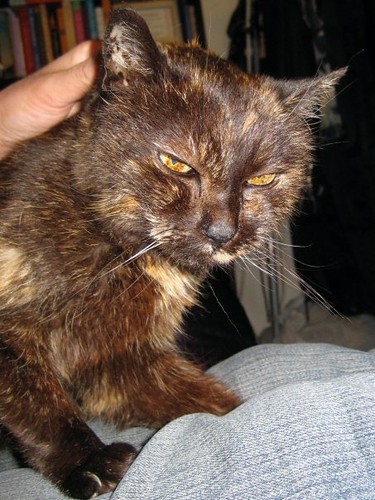
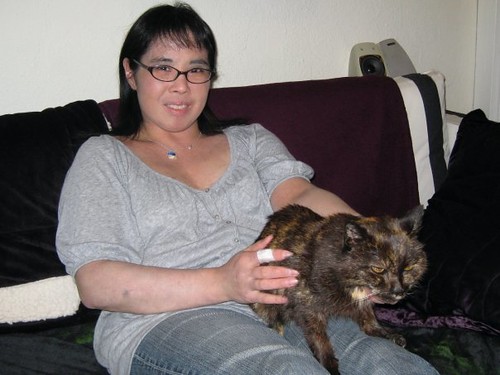
I am extremely fortunate to have friends and colleagues at the SF/SPCA that are available to look after my senior cat, Matilda. In her golden years, Matilda is not the kind of cat that you can just put out a fresh bowl of food and water and leave. She requires a savvy cat sitter who knows her well and can tell if she's feeling a little wonky. With cognitive dysfunctions, spinal arthritis, intermittent vomiting, low appetite and the need for subcutaneous fluids every few days, Matilda is quite the challenge to care for. Again, I am extremely lucky to have a great cat sitter that not only gives her love and attention, but was kind enough to document each day with pictures!

donnamatilda

World's Best Cat Sitter : Donna watches over my broken down cat Matilda


If your cat is lower maintenance, the best thing to do for long absenses is to ask friends or hire a pet sitter to check in – to feed and provide fresh water, clean the litterbox, and groom your cat at least once a day. Ask them to engage in some interactive playtime with your cat. It will provide exercise and mental stimulation, and the exercise can reduce stress. Someone who is familiar with your cat is ideal.

If you are going away for more than 2 weeks, it is best to have someone who can spend the night at least a few times a week while you are away.

When hiring a cat-sitter:

  • Get references from friends, your vet, or local animal rescue.


  • You may prefer to use a pet-sitter who is bonded and insured, and they should offer you references if requested.


  • Ideally, have the pet-sitter meet your cat before you hire them, to see how they interact with your cat.


  • Make reservations early, as pet-sitters can get booked up quickly, especially during holidays.


  • Leave carefully written instructions for the sitter about where food, litter and medications are located. Also note your cat’s preferences for grooming, treats, affection and interactive play.


  • Buy extra supplies in case your travel plans change.


  • Make sure your cat has an ID tag and microchip. Have current photos available in case she gets lost while you are gone.


  • Have a friend who has a back up set of keys and is willing to be an emergency contact.
    Make sure the pet sitter has your contact information for the duration of your travels.


  • Have a written letter authorizing the pet sitter to approve emergency veterinary care in your absence.

  • A written contract outlining fees, method of payment, and the terms of the services offered (amount of time spent with pet, time of day they will visit, other services they will provide such as checking mail or watering plants) is recommended

Boarding


Sometimes there is no choice but to board your cat. Boarding can be stressful, as your cat will be out of their familiar territory, surrounded by strange people, noises, and smells. If you must board your cat:

  • Call ahead of time; kennels book up quickly during holidays.
    Many vet offices and animal hospitals also do boarding.


  • Visit the kennel before committing.
    Many kennels require proof of up-to-date vaccinations, so inquire ahead of time about what shots your cat might need.


  • It’s best to bring along familiar items for your cat – bedding, something with your scent, toys and whatever food they currently eat. Also bring along any medications your cat needs.


  • Give the kennel detailed information about your cat’s preferences and needs, as well as your contact information.

If your cat is staying at someone else’s house…


Although not ideal, sometimes you have to take kitty to another home to stay. A “safe room” should be provided for your cat – away from noise and other animals. Some cats will need to stay in one room for the duration of the visit, depending on how outgoing (or shy) your cat is and how comfortable they are with strangers, other animals, and new environments. Security is a big issue, so make sure there is no chance for your cat to escape (through open windows, cat doors or other doors left open) – if she does she will be lost and far from home.

Monday, August 17, 2009

RINGWORM: Winning the fight against fungus!

By Daniel Quagliozzi
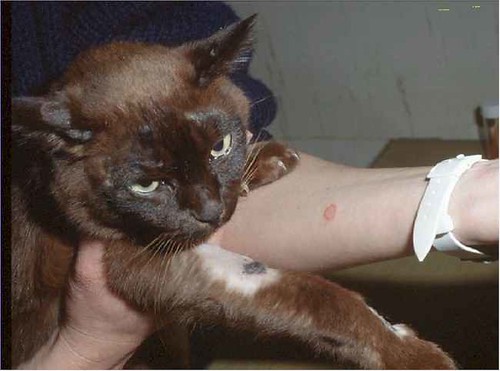
ringworm%20cat%20and%20human


When anyone mentions the word Ringworm, especially in animal shelters, the gut reaction is almost always to start itching. Blegh!!! Ringworm! It's a animal shelter reality and horror story all wrapped in one. It seems like every year, particularly in the summer, we are battling this fiesty fungus with everything we've got, due to the high volume of kittens and cats coming in from other shelters.

When one cat has ringworm, we have to bleach every kennel it has lived in, every carrier it was transported in and quaranteen every cat it was exposed to. Sound easy? Not if you have 30 or more cats that have transmitted or have been exposed to the fungus and every human that cleans, feeds and socializes the cat has to wear a surgical gown, rubber gloves and foot covers just to walk in the room and say hello.


RINGWORM FACTS


WHAT IS RINGWORM?

Ringworm is NOT A WORM, its actually a FUNGUS that creates lesions on the dead surface layers of skin, hair, and claws. It is a zoonotic disease, meaning it can be transmitted between people and animals. The infection is common, worldwide, and is similar to athlete’s foot. Ringworm is contagious to people and animals, and it appears in our shelter that we have the first stage of an outbreak of the fungus.

HOW IS IT TRANSMITTED?

The fungus is transmitted by spores that attach to the skin, which germinate to produce hyphae that invade the dead layers of skin and hair. Animals become infected either by direct contact with an infected animal or by exposure to a contaminated environment or object such as grooming tools or bedding.

WHAT DOES IT LOOK LIKE?

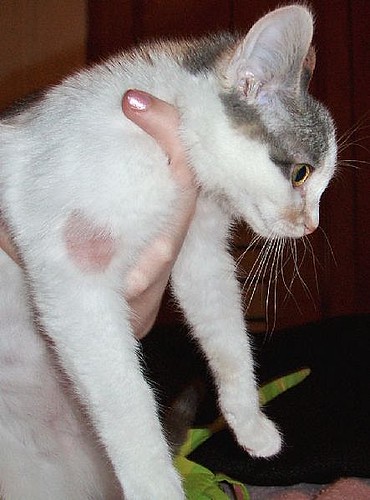
ringwormcat-main_Full


The signs of ringworm can vary, but most animals have the classic ringworm lesion: a circular red area of hair loss which is surrounded by broken hair and scale at the edge of the lesion. The lesions typically heal from the center as they enlarge peripherally. Other signs of ringworm may include patchy hair loss, itching, inflammation, and infection of the nails. In people, ringworm of the scalp usually begins as a small pimple that becomes larger, leaving scaly patches of temporary baldness. Infected hairs become brittle and break off easily. Yellowish crusty areas sometimes develop.


ARE YOU GETTING ITCHY?!?!?!?!

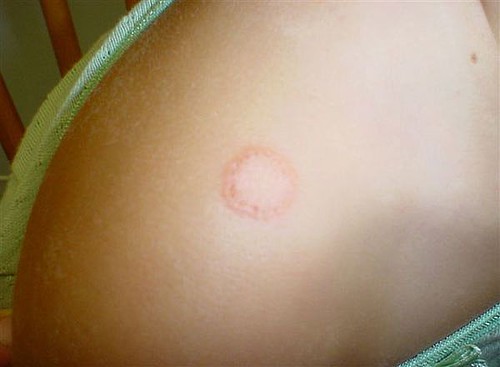
ringworm-main_Full


Ringworm of the body shows up as a flat, round patch anywhere on the skin except for the scalp and feet. As the rash gradually expands, its center clears to produce a ring. More than one patch might appear, and the patches can overlap. The area is sometimes itchy. Ringworm of the foot is also called athlete's foot. It appears as a scaling or cracking of the skin, especially between the toes.


HOW IS IT TREATED?

Animals are treated with an oral medication and lyme-sulfur dips. The treatment takes 4 to 8 weeks. Humans are treated with a cream you can purchase without a prescription. If the cream doesn’t work, your physician can prescribe medication that will kill the fungus.


Ok, now that you are sufficiently grossed out, go buy a tube of Lamasil, just to be safe!

Friday, August 14, 2009

I Love You, But Please Be Quiet!

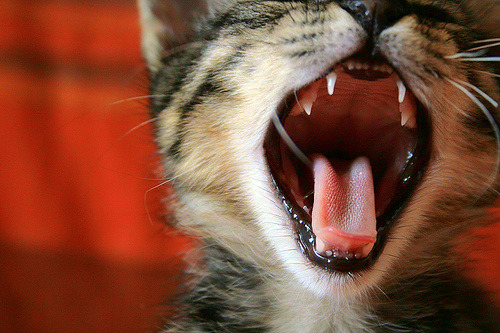
Though cats communicate mostly by body language, some cats “talk” more than others. This is could be genetic (some breeds, such as the Siamese, are especially prone to this) and partly a learned behavior. It's even been said that cats have a Manipulative Meow!

meow


Your cat may have learned that if she meows, people will talk to her, play with her, feed her, or even yell at her (trust me, I know this first hand). Remember for some cats negative attention is better than none at all. Some owners love to “talk” with their cats, back and forth, so if you have adopted your cat as an adult, it is possible that this behavior was encouraged by a prior owner. If you have brought Kitty up, then most likely you can think of things that have “rewarded” this behavior. Cats learn to communicate with us, just as we learn to communicate with them. Maybe when the litterbox is dirty, your cat draws your attention to it by walking around and meowing, and so you clean the box. This is how behavior patterns start.

Cats also meow to express discomfort or pain, agitation, and in some cases, territoriality. Unneutered (intact) male cats may yowl in conjunction with sexual behavior, and female cats in heat may meow excessively as well.

If you have a chatty cat, how can you stop or at least curb this habit?

Do Not Reward

This should be the backbone of your behavior modification plan. Pay attention to your kitty when she is being quiet, wait for a moment of silence before you feed her. Ignore her when she meows. If you are having trouble sleeping at night, you can try earplugs, or pulling the cover up over you head! Or you could close the door to your bedroom. Remember that if you break down and give your kitty attention, you will have to start all over again. For more information on how to prevent nighttime or early a.m. wakings, please ask for our handout on nocturnal kitties.


cat_meow_119801gm-a

Make Sure Your Cat’s Needs Are Met!

Cats need attention and interaction, so make sure that somewhere in your daily schedule you allot times for play and petting. Cats like routine and will meow excessively if their routine is upset, so do try to do everything, especially if it’s cat related such as feeding and changing the litterbox, on a set schedule as much as you are able. Provide your cat with stimulation. Keeping your cats indoors is much safer, but they will need to be entertained and encouraged to exercise. Even indoor-outdoor cats need owner interaction and stimulation. New toys, bought or made, food cubes that make Kitty work to get her food, and the occasional catnip toy help keep her from getting bored. Interactive playtime is the best kind of playtime for cats- toys like fishing-pole toys that your cat can chase could be integrated into a daily routine. Make sure your cat has a clean litterbox, and fresh water at all times. Make sure her diet is adequate. .

Be Patient!

It takes time for cats to learn behaviors, and often takes even more time to unlearn them. In order to make a change in your cat’s meowing, you need to be very consistent and give your cat time to adjust.

Recognize When A Behavior Is Not Likely To Change:

You may be able to reduce the amount of attention-getting meowing or feeding-time meowing by ignoring, and feeding and playing at set times, but this will not cure a hard-core talker such as some Siamese or Siamese mix breeds are. These behaviors are characteristic of some breeds, and are not likely to go away in their entirety.


THESE SITUATIONS REQUIRE A DIFFERENT RESPONSE


sadcat2


If Your Cat Is Grieving:

If your cat has recently lost a companion, feline or human or even canine, he may walk around the house and meow, perhaps in search of them or just reacting to the change. While you don’t want to reward the meowing, it is important to give your cat extra reassurance in these cases, spending quality time, preferably on a schedule, until he adjusts to his loss.

If You Have Just Moved To A New Home, Or Have Just Brought A Cat Into Your Home:

It is normal, especially for an adult cat, to be disoriented and unsure in a new environment. Introducing your cat to the house gradually may help prevent some agitation (see our handout on introducing a cat to a new home.) Again, don’t reward the meowing, but be a little understanding in these instances. This behavior usually takes a few weeks to wind down.

If Your Normally Quiet Cat Has Become Very Vocal:

Make sure there is nothing medically wrong with her; schedule a check-up with your vet. Pay attention to environmental changes to see if something could be bothering her, such as a new stray cat coming by your back door.

Tuesday, August 11, 2009

In or Out? How to make up your mind

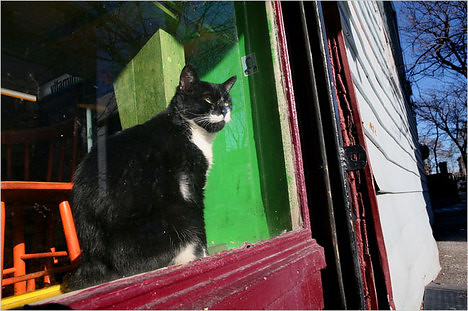
When people think of the ultimate living situation for a cat, several ideal scenarios may come to mind. Some may think that keeping their cat(s) indoors is safer, while others do not want to take away the quality of life that an outside animal has, justifying their cats need to go outside as more natural or instinctual. Does an indoor cat miss anything by never going out? Does an outside cat have a better life because it can choose it's own territory and lay in the grass?

CatOreoBroolynDeli-thumb-468x311

A major risk for outdoor cats, and one we hear about all too often, is being hit by a car. Cats can also get stuck in many compromising situations, under houses or crawl spaces where they can become dehydrated or starve. Encounters with other cats can expose your cat to diseases, some of which cannot be vaccinated against, like FIV & FELV. Finally, there are people who simply do not want cats in their yard. These disgruntled neighbors may trap your outdoor cat and take him or her to the animal control center or far far worse punishments. Yikes, I shudder to think about it sometimes.


Fortunately, there are many ways to help your feline friend to have a happy, fulfilled life indoors or to allow your cat a safe outdoor experience.

Making The Outdoors Safe

If your backyard has a fence around it, consider installing a Cat Fence .This netting system prevents your cat from leaving the yard, so you know where he or she is at all times. It can also be used to keep other cats out of your yard.

Build an enclosure outside. This allows the cat to have an outdoor experience while remaining safe. Check cat magazines for ideas and plans.

catharnessoutside
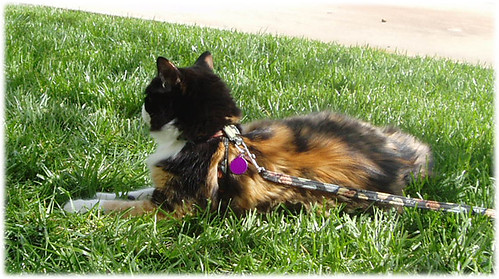
If you have a younger cat, train him or her to accept a leash and harness. This way, you can take the cat on monitored outdoor excursions. While a few brave cats may enjoy walks around the neighborhood, the majority will prefer sticking close to home—the front or back yard.


staring


Transitioning A Cat To Indoors Only

This isn't going to happen overnight folks. Hang in there and make some adjustments to your home and maybe even to your lifestyle. You will have to make Small compromises to make your cat happy

catsun

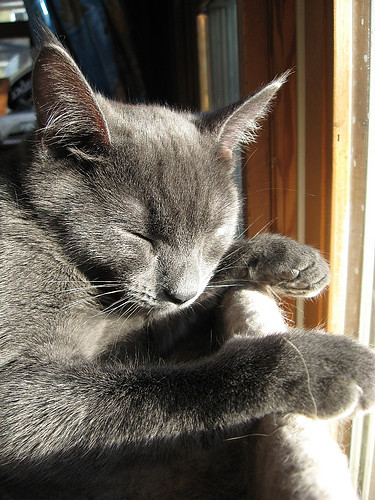
Put screens on your windows and get a kitty window seat.

Play with your cat more. Get him running around, chasing a string or other toy several times a day. A little catnip makes it even more fun!

DSCF3300
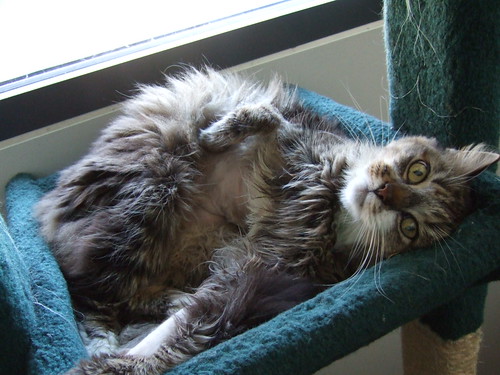
Add vertical space to the cat’s territory. Cat trees, cat condos, shelves, and other climbing apparatus give your cat more places to climb, play, and call her own.


Provide scratching posts. Try posts made of different materials—corrugated cardboard, wood, carpet, or sisal rope. You can get freestanding scratching posts, floor level, or door hanging varieties.
51399878_IMG_0616VideoCatnip2
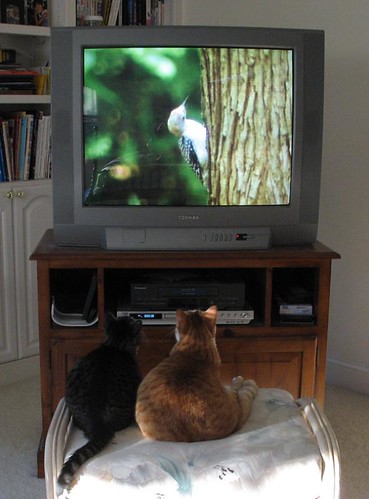
Play videos. Many cats enjoy watching videos of cats, birds, fish, insects and nature scenes. Check your local pet supply and video stores.

catkittygrass[1]
Grow kitty grass. Available at many pet supply stores, it is safe and tasty for your cat to nibble.

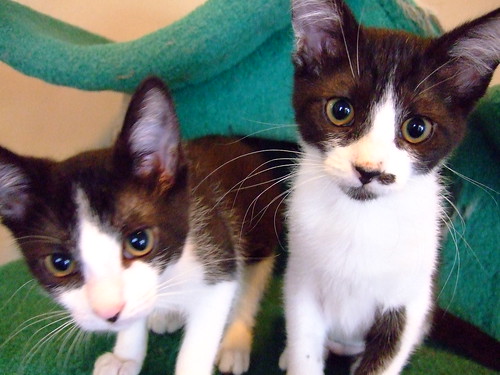
If your cat is an “only child”, consider adopting another to keep him company. That would make The SF/SPCA, You and your cat very happy!

2009_06300031

Remember: even indoor cats should always wear an elastic or breakaway collar and an identification tag. In an earthquake, fire, burglary, or other mishap, a cat can easily become lost outside, and identification is her best bet for getting home.

Friday, August 7, 2009

Why Is It Cuter To Spay & Neuter?

DSCF3821


Overpopulation of cats is a huge concern, not just in the Bay Area but in shelters across the country. Quite simply, the more animals sterilized by spay & neuter surgery, the less homeless cats and dogs will wind up in shelters, live in feral colonies or create an epidemic of strays that carry diseases. In extreme cases cats are often euthanized for space, time and undersocialization which makes them un-adoptable or extremely hard to place in compatible living situations.

So, why should YOU spay & neuter????

• Spay/neuter surgery has health and behavior benefits. It removes reproductive organs that often cause cats to have medical problems in later life.

• Spaying reduces the risk that a female cat will suffer from mammary tumors and uterine cancer. It eliminates the risk of complications from pregnancy.

• Neutered males won’t develop prostate problems or testicular cancer.

• Altered cats are more relaxed pets, because they are not driven to mate, and they are less inclined to defend territory and spray. They are less apt to fight with other animals. They are not as likely to roam, so there’s less chance they will get lost, injured or killed.

• Neutered cats are less apt to urinate or spray in the house.

• Altered cats have fewer behavior issues.

• Contrary to popular belief, altering does not spoil your pet’s personality. Nor does it make your pet fat and lazy.

• Spay/neuter surgery also has humane benefits. It saves lives by preventing unwanted litters and homeless animals.

It's a myth that cats should have one litter before spaying:

• Motherhood does not make for a better pet; having a litter doesn’t necessarily result in a calmer cat.

• There are advantages to altering at an early age.

• Early spay/neuter surgery ensures that a cat won’t reproduce.

• Animals altered at an early age seem to recover more quickly and painlessly that those altered later on.

• There is less surgical trauma, faster recovery and fewer complications with early spay/ neuter surgery.


Still wondering why its cuter to Spay & Neuter? I didn't think so! Contact the San Francisco SPCA Spay & Neuter Program.


2009_06300035


To make an appointment, call 415.554.3030
Leanne B. Roberts Animal Care Center201 Alabama StreetSan Francisco, CA 94103
Open Monday - Friday, 8 a.m. - 6 p.m. (except holidays)
Free client parking available in The SF/SPCA lot at Alabama & Treat streets.

Monday, August 3, 2009

OUTREACH: Adoptions Unsung Heroes

By Daniel Quagliozzi

The Outreach Adoption Program is very close to my heart as I spent three years of my early career with the San Francisco SPCA doing events all over the city & county, even across the bay. Outreach is a vital piece of the SF/SPCA mission. It takes adoptable animals out of the confines of the shelter and brings them to neighborhoods, street corners, office buildings, street fairs, adopt-a-thons, pet supply stores and practically to your living room if they could get permission to wheel the cages in.


kittypoinsettia500

The biggest and most noteable event is our annual Macy's Holiday Windows, which utilizes the beautiful window displays of Macy's Union Square and spotlights adoptable cats & dogs. Each year we break records, finding homes for over 300 animals.


SFSPCA-8


The SF/SPCA and Macy's holiday windows are a popular, annual tradition in San Francisco, showcasing adoptable animals in displays that take into account every element of design and comfort, from temperature controls to climbing and hiding spots for the featured dogs and cats.


SFSPCA-17

The philosophy of Outreach has always been to educate the public about animal welfare while still providing the very important service of finding cats, kittens, dogs and puppies loving homes. It's not hard to win over the public when you are armed with kittens. We almost always have you at "Hello"! Who can resist?


Outreach SFSPCA


Putting together an Outreach event is no easy task. Suitable animals have to be behavior tested and selected for the drive. A foldable tent, cages and table set up have to be loaded into the van each day and set up under the backdrop of downtown San Francisco and it's heavy foot traffic. Weather, noise level and safety are always a big concern, but the staff and dedicated volunteers are seasoned and ready for just about anything. I remember one time on Castro Street, a gust of wind nearly tore down our entire site, sending our tent, literature and chairs flying. Luckily the kittens in the cages were not harmed as they were anchored down really well.

The people who happened to be just walking by really stepped up and helped us put humpty dumpty back together again. That moment really stands out for me. The support I felt for our organization and our animals was overwhelming. Outreach truly bridges the gap between the SF/SPCA and the community that supports us, even in hard times.

If you want to see what all the excitement is about and attend one of our Outreach events in San Francisco, drop by the following locations:


August
Saturday, August 1 – Justin Herman Plaza, 9am – 1pm
Sunday, August 2 – Catnip and Bones, 11am – 2:30pm
Tuesday, August 4 – Embarcadero 4, 11am – 2:30pm
Wednesday, August 5 – Embarcadero 4, 11am – 2:30pm
Thursday, August 6 – Levi Plaza, 11am – 2:30pm
Friday, August 7 – 50 Fremont, 11am – 2pm
Tuesday, August 11 – Embarcadero 4, 11am – 2:30pm
Wednesday, August 12 – Embarcadero 4, 11am – 2:30pm
Thursday, August 13 – Levi Plaza, 11am – 2:30pm
Saturday, August 15 – Justin Herman Plaza, 9am – 1pm
Sunday, August 16 – Catnip and Bones, 11am – 2:30pm
Tuesday, August 18 – Embarcadero 4, 11am – 2:30pm
Wednesday, August 19 – Embarcadero 4, 11am – 2:30pm
Friday, August 21 – 50 Fremont, 11am – 2pm
Saturday, August 22 – Justin Herman Plaza, 9am – 1pm
Sunday, August 23 – Catnip and Bones, 11am – 2:30pm
Tuesday, August 25 – Embarcadero 4, 11am – 2:30pm
Wednesday, August 26 – Embarcadero 4, 11am – 2:30pm
Thursday, August 27 – Levi Plaza, 11am – 2:30pm
Friday, August 28 – Palace Hotel Event, 11:00am – 3:00pm

*Schedule subject to change*

Mobile Outreach location details:

50 Fremont - in the Food Court Plaza

Catnip & Bones -2220 Chestnut Street at Pierce Street
Embarcadero 4
Drumm Street at Sacramento
Justin Herman Plaza
Foot of Market Street
Levi Plaza - Battery Street at Filbert Street

For more information, email us at outreach@sfspca.org.
Learn how you can sign up to help with Mobile Adoption Outreach!

Friday, July 31, 2009

Video Extravaganza!!!!!

SF/SPCA Voted BEST San Francisco NON PROFIT in The Bay Guardian!
We would like to thank everyone who took the time to place a vote for our organization. We will continue to set the pace in Animal Welfare, not only in San Francisco but across the United States.
Ask out Thomas for a dinner date. He's already dressed for the occasion!

Ariana has been waiting too long for her perfect play partner.
Take a chance on two long term cats that need the simple things in life just like YOU!