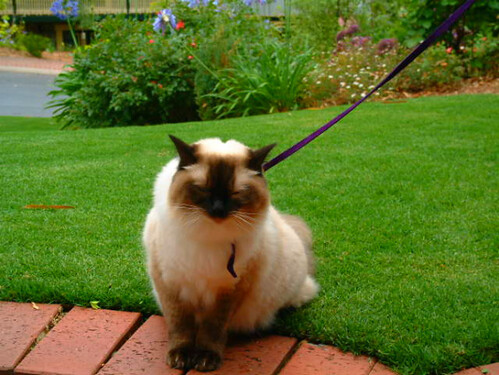
Showing posts sorted by relevance for query harness. Sort by date Show all posts

Monday, April 13, 2009

Have You Ever Walked Your Cat?

By Jamey Walker


simeseharness


We all know about walking dogs. They have classes, dog walkers, and about a million different leashes, collars and harnesses. Cats on the other hand are often seen as way too independent and dignified to succumb to such an extroverted and obedient activity. Now let’s be clear, many cats really do not enjoy this. If you have a cat that’s shy, nervous or reactive to other cats, walking them outside on a harness may not make them a happy camper. On the other hand, if you have a playful, young and outgoing cat, you may have a candidate….of course they should be spayed or neutered and free of any health issues. You should also have access to a quiet area that is safe for your cat to explore like a garden or backyard. The space should be free of any threats like dogs, other cats (kitties that have not met one another can be a source of stress) or lots of different people. Make sure you have a carrier handy so that kitty can be safely put away if this becomes too stressful.

Ok, now you’re ready to start teaching your cat how to feel comfortable on a leash and harness.


small_breed_soft_harness1[1]


First, purchase a harness and leash. These come in all different styles. I find that the soft Velcro ones are sometimes accepted easily, but any will do. The leash should be on the longer side for room to roam (a retractable leash can be good for this).
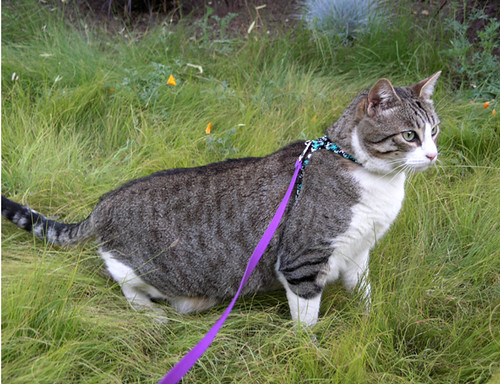

Leash

Next, try putting the harness on your cat without the leash. Your cat may act uncertain for a bit. Have treats handy and give kitty lots of positive rewards just for having the harness on. Do short bursts of harness wearing and treat-giving to familiarize your cat with the sensation of wearing something on their body. Each cat’s response will be different. Don’t force your cat and be sensitive to their anxiety levels. If they fuss a lot, take it off and try again at another time.


When your cat is wearing the harness around the house normally, hook up the leash and walk wherever your cat walks. Don’t pull or allow any resistance between the cat and yourself. You simply follow the cat wherever they go.
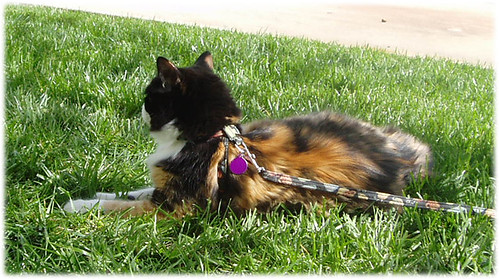


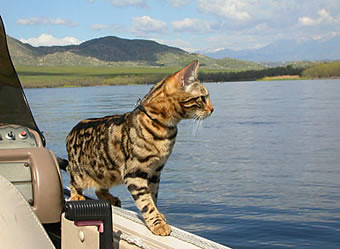
catharnessoutside


This is the big secret; the cat is actually walking you!

When you can successfully be walked around the house by your cat, you may be ready to try a new environment. This can be an outside hallway or back porch. Start off slow. If kitty seems stressed, end the session. If your cat acts curious, let them explore. Give them a short session at first, followed by a fun familiar activity back at home base. Over time you can extend the outside sessions as they feel comfortable.
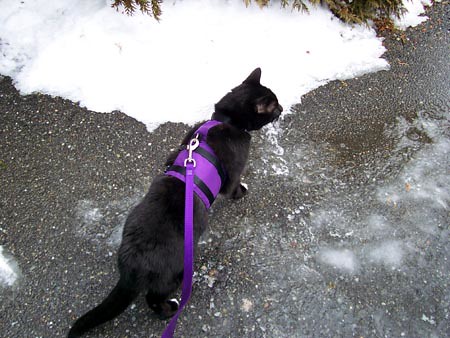


fredcwj


Controlled outside time can be stimulating and psychologically rewarding for the right cat. The sights, sounds and smells can add enrichment to their daily lives. Again, make sure your cat feels safe, let them take the lead, and end any outside time that seems overwhelming for your cat.

Monday, July 27, 2009

Ahoy Matey! Cats on Boats?

By Daniel Quagliozzi


This weekend I went sailing on the San Francisco bay with some friends. We set sail from the docks of Sausalito and braved some choppy waters, taking on the powerful bay waves. I truly felt small among the vastness of the bay and somewhat helpless against the tides. Thankfully we had an awesome and capable captain.
While we cruised the bay, I couldn't help but think about the people living in the boats scattered around the shores and docked at the port of Sausalito. There were quite a few boats that were being lived in. Maybe it's a sign of the times? Possibly the economy? Talk about cramped quarters! It's got to be interesting to live that lifestyle, but I couldn't imagine living anywhere without a cat. Who says you can't have a cat, just because you live on a boat?


Vernazzacat_full


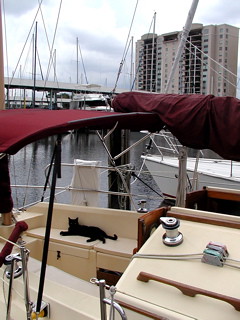
And then...I saw him, a nimble black and white cat scaling the deck of one of the boats docked in the harbor. He seemed well adjusted and content, just like any cat you might see sitting in the window of someone's house. He knew his boundaries and stayed within the lines. Yet still, I wondered what it must be like when the boat set sail. All the rocking and shuffling about was enough to make me a little queezy. What must it be like for a cat? For centuries, cats stowed away on ships and made their way across the oceans, landing in foreign places. Cats adapt, plain and simple.


BoatNewOrleansMarinaMitch


Coincidentally, we received an email about cats on boats this week:


We adopted our adorable cat from the SF SPCA. We have special circumstance in that we live on board a boat. I have heard that in order to train a cat to stay on board you should toss them into the water the first time they try to get off the boat. I do not agree with this and certainly don't have the courage to terrify our beautiful new baby in this cruel way. My question to you is; how do we train her to stay on the boat and not get off onto the dock? She is an indoor cat, but we would like to allow her the freedom of the decks and flying bridge, if possible.


autumn_boat_balancing


Dear Adopter,


I would agree that tossing your cat in to the water would be the wrong thing to do. That would only serve to heighten anxiety towards you and the environment in general. I would fit her for a harness and get a nice long leash. They sell thin, lightweight leashes in various lengths. This way she can explore and be safe at the same time. Of course she will most likely lay flat on the ground when you first put it on, that's normal.


Rather than thinking of her like a dog on a leash, think of the leash as just a life line. Keep it slack and don't pull her. Coax her over to you with food or toys. All cats respond differently with a harness but give it some time and keep it positive. Other than to create a barrier of some kind, there's no real way to keep a cat from roaming onto a dock. They don't respond the same as dogs and don't have the same group social needs. Cats explore.


Management is your best option.

Tuesday, August 11, 2009

In or Out? How to make up your mind

When people think of the ultimate living situation for a cat, several ideal scenarios may come to mind. Some may think that keeping their cat(s) indoors is safer, while others do not want to take away the quality of life that an outside animal has, justifying their cats need to go outside as more natural or instinctual. Does an indoor cat miss anything by never going out? Does an outside cat have a better life because it can choose it's own territory and lay in the grass?

CatOreoBroolynDeli-thumb-468x311

A major risk for outdoor cats, and one we hear about all too often, is being hit by a car. Cats can also get stuck in many compromising situations, under houses or crawl spaces where they can become dehydrated or starve. Encounters with other cats can expose your cat to diseases, some of which cannot be vaccinated against, like FIV & FELV. Finally, there are people who simply do not want cats in their yard. These disgruntled neighbors may trap your outdoor cat and take him or her to the animal control center or far far worse punishments. Yikes, I shudder to think about it sometimes.


Fortunately, there are many ways to help your feline friend to have a happy, fulfilled life indoors or to allow your cat a safe outdoor experience.

Making The Outdoors Safe

If your backyard has a fence around it, consider installing a Cat Fence .This netting system prevents your cat from leaving the yard, so you know where he or she is at all times. It can also be used to keep other cats out of your yard.

Build an enclosure outside. This allows the cat to have an outdoor experience while remaining safe. Check cat magazines for ideas and plans.

catharnessoutside
If you have a younger cat, train him or her to accept a leash and harness. This way, you can take the cat on monitored outdoor excursions. While a few brave cats may enjoy walks around the neighborhood, the majority will prefer sticking close to home—the front or back yard.


staring


Transitioning A Cat To Indoors Only

This isn't going to happen overnight folks. Hang in there and make some adjustments to your home and maybe even to your lifestyle. You will have to make Small compromises to make your cat happy

catsun

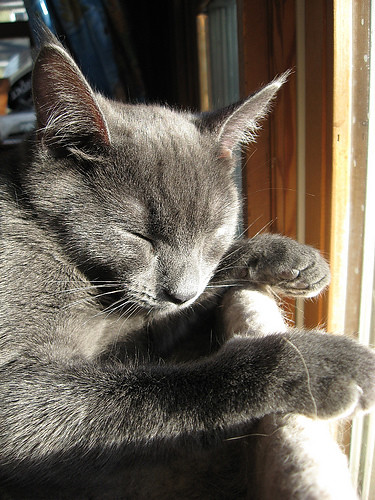
Put screens on your windows and get a kitty window seat.

Play with your cat more. Get him running around, chasing a string or other toy several times a day. A little catnip makes it even more fun!

DSCF3300
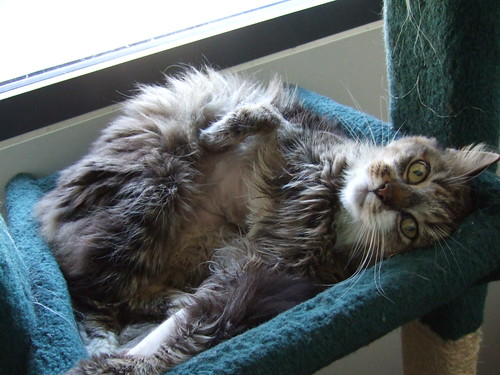
Add vertical space to the cat’s territory. Cat trees, cat condos, shelves, and other climbing apparatus give your cat more places to climb, play, and call her own.


Provide scratching posts. Try posts made of different materials—corrugated cardboard, wood, carpet, or sisal rope. You can get freestanding scratching posts, floor level, or door hanging varieties.
51399878_IMG_0616VideoCatnip2
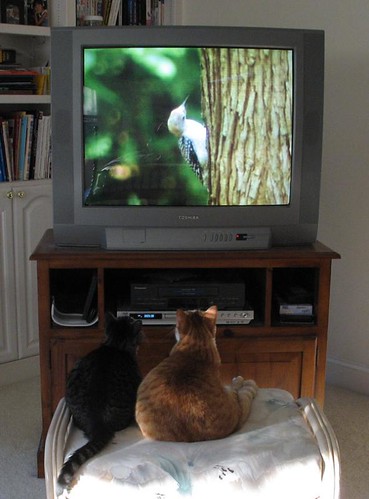
Play videos. Many cats enjoy watching videos of cats, birds, fish, insects and nature scenes. Check your local pet supply and video stores.

catkittygrass[1]
Grow kitty grass. Available at many pet supply stores, it is safe and tasty for your cat to nibble.

If your cat is an “only child”, consider adopting another to keep him company. That would make The SF/SPCA, You and your cat very happy!

2009_06300031

Remember: even indoor cats should always wear an elastic or breakaway collar and an identification tag. In an earthquake, fire, burglary, or other mishap, a cat can easily become lost outside, and identification is her best bet for getting home.

Friday, March 6, 2009

Office Space or Hospice Place?

By Daniel Quagliozzi


When cats enter the shelter with life threatening illnesses, it can sometimes be a very long road until they are ready for adoption. In some of the more serious cases, these cats will need to be hospiced in homes for months at a time until they reach a level of rehabilitation or pass away with dignity. It's a tremendous service that's very generous and never taken for granted. But, what do you do when you run out of homes to hospice cats and you have lives to save?

The SFSPCA found the answer to this question in it's own shelter. We opened our office doors to "Offspice" some of the shelters neediest cats & dogs. Why not let them live with us while we work? We can give them their medications, keep track of their weight and appetite and most of all , give them love to help them feel better. Were there any objections to this idea? No way!

Since the summer of 2008, The Cat Behavior office has been a safe haven for cats with various debilitating illnesses and behavior concerns as well as a destination for the volunteers and staff who love them. We thought, why not!?! We have the space and essentially our office is just like a cat condo. Lets get some cats in here! Cat trees and litter boxes were soon added to the office as well as cages for some of the shy kittens.

Dab

There was " Dab " an undersocialized kitten that bit Daniel the first day he was here but turned into an angel after weeks of socialization and TLC from the volunteers & behavior staff.
Gilroy[1]
Lets not forget, Gilroy , a staff favorite who lived out his last golden year, walking on a harness all around the shelter, dressing in his Santa costume , going on various radio and tv shows and even made a debut at Holiday Windows, while being treated for intestinal cancer. He touched so many but left us early this year after losing his battle with the disease.

12-18-08_047[1]

Then, there was our orange tabby, Yo , a cat with liver cancer, who stayed briefly in the office until he built up an appetite and gained enough weight to move on to a foster home. To this day he is still living there. His foster parent may never bring him back.

maya

Oh.. and Maya, a brown tabby senior cat who lounged in the office while being treated for arthritis. We had special stairs for her to get up to her favorite spot on the cat tree. Maya is currently available for adoption!

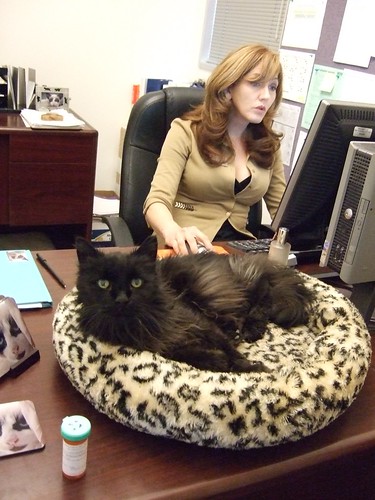
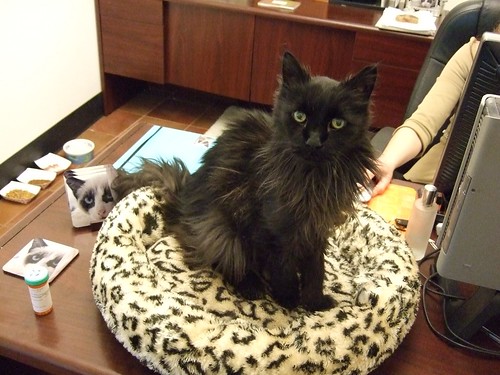
The Offspice trend does not stop at the behavior office. Other departments have also volunteered to take in our special needs cats as well. In fact, Moses aka "The Senator", a long haired black cat, being treated for hyperthyroidism, arthritis, high blood pressure and various lumps that give him character, is currently running the show in the office of our Client Care Manager.


Senator1
Suzanne Hollis says that one night while she was home, the Senator stepped on the redial button of the phone on her desk and dialed her! She could hear him breathing on the speaker phone. What a character! Along with his huge medical record comes a feisty "cattitude" that comes out when the Senator is being examined. Can you blame him though? "It's a small sacrifice to share my desk with such a handsome politician of love", said Suzanne.


senator2
We'll be posting the progress and availability of any special needs cats that apply to be roommates in the Cat Behavior Office. Maybe YOU want to open your home to a cat that needs help too? If you are interested in Fostering or Fospicing a cat or kitten, contact Alison Lane in our Foster Care Program. She can be reached by email : foster@sfspca.org or by calling 415 522-3542 http://www.sfspca.org/support/volunteering/foster-care.html