Showing posts with label catsitter. Show all posts

Wednesday, August 26, 2009

Cat Behavior: Don't take it personally!

By Daniel Quagliozzi


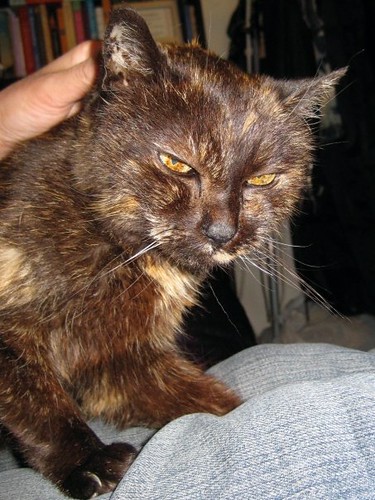
Mischief_is_not_amused


As a person who works not only with cats but also with their guardians, I often find myself counselling far beyond the scope of cat behavior. Human emotion is a huge factor in the way people perceive their cats actions. Can you blame us? We humans are so vested in each others feelings that it is very easy to equate the same perception to the way our cats view the world.

Did kitty suddenly pee on my pillow because he's mad at me? "My cat purposely knocks my hair brush into the toilet because he thinks I'm ignoring him and he knows how particular I am about my hair". "I was just sitting there minding my own business and my cat snuck up on me and bit my ankle! He HATES ME!!"

couch is full


Believe it or not, cats care very little about how you feel, what you like, which shirt is your favorite and who you are dating. In fact, cats are quite selfish creatures. They almost always do things that are completely self serving. Ever find yourself getting up at 6 am to fill a food bowl or sitting on the edge of the couch where its less ideal because your cat prefers the middle? Cats are manipulators plain and simple and when they do things a little out of the ordinary (by human standards) they are not trying to hurt your feelings. They are however... trying to tell you that some things have to change!

Ok...perfect example: The cat who peed on your pillow. Chances are there is something about that litterbox that your cat is unhappy with. Did you forget to clean it, change the litter suddenly, add more cats to your home, go on a long vacation, have a mobile toddler running amok in the apartment? A sudden poop mishap or wayward pee points to stress, change or something new that may be triggering it. Why my boyfriends pillow? He must not approve of the guys I'm dating! No, chances are the box was such a turn off that a soft pillow was very inviting. Once the habit forms, the pillow becomes part of the regiment. Focus on what may be triggering the behavior and make things simpler.

phone

The constant conversationalist: "Whenever I'm on the phone, my cat won't stop meowing? He must want me to get off the phone." I highly doubt that your cat knows what a phone is. Maybe he thinks you're talking to him? Usually when you talk to him, he is rewarded in some way. A treat, petting session, maybe even some playtime, will usually follow a human-cat conversation. Talking on the phone is such a tease!

The over the counter-knocker-over: Cats get bored! Could it be that your cat is knocking your pencils off the counter each day because you're not engaging her in long enough play sessions? Does she wake you up at night by making noise? Do you get up, yell or turn on a light? Guess what? You just rewarded your cat! Even responses we think are negative can be perceived as positive from a cats point of view.
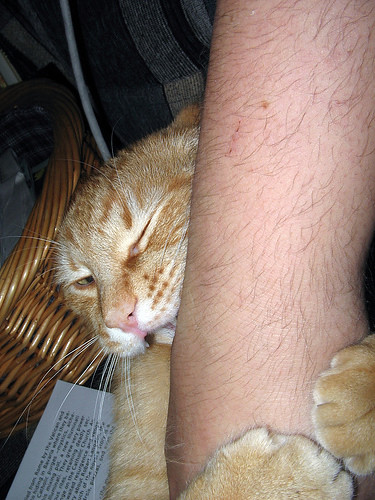

bite


The "Out of the Blue" attack: Sudden aggression without stress as a trigger almost always points to deprivation. Some cats need constant stimuli, plain and simple. Sure, most cats sleep all day and sleep even more at night. Other cats will count on you to provide them with entertainment, no matter how long your work day was or how little sleep you got because he was standing on your head all night. A sudden bite on the leg is an extreme cry for attention. PAY ATTENTION TO ME! Dancing With the Stars can wait!

Bite the bullet folks. You may have been at school for nine hours feeding your brain, but kitty was home with nothing to do all day. When you walk in the door, it's GO TIME! Get those toys out and get your cat engaged in play.


So, you see... it's not all your fault...but really it is. Don't take it personally. Just remember whose house you live in and who your boss really is and you will do just fine.

Wednesday, August 19, 2009

Aloha For Me... Alone Time for Her


By Daniel Quagliozzi


All of us deserve a vacation once and a while. Just some time to get away and go somewhere else, without a care in the world. But, as a cat guardian, it's often very hard to step away from our homes for more then a few days without calling in reinforcements to take care of our furry friends, while we bask in the sun or hike a mountain trail, miles away from home.

donnamatilda2


I am extremely fortunate to have friends and colleagues at the SF/SPCA that are available to look after my senior cat, Matilda. In her golden years, Matilda is not the kind of cat that you can just put out a fresh bowl of food and water and leave. She requires a savvy cat sitter who knows her well and can tell if she's feeling a little wonky. With cognitive dysfunctions, spinal arthritis, intermittent vomiting, low appetite and the need for subcutaneous fluids every few days, Matilda is quite the challenge to care for. Again, I am extremely lucky to have a great cat sitter that not only gives her love and attention, but was kind enough to document each day with pictures!

donnamatilda

World's Best Cat Sitter : Donna watches over my broken down cat Matilda


If your cat is lower maintenance, the best thing to do for long absenses is to ask friends or hire a pet sitter to check in – to feed and provide fresh water, clean the litterbox, and groom your cat at least once a day. Ask them to engage in some interactive playtime with your cat. It will provide exercise and mental stimulation, and the exercise can reduce stress. Someone who is familiar with your cat is ideal.

If you are going away for more than 2 weeks, it is best to have someone who can spend the night at least a few times a week while you are away.

When hiring a cat-sitter:

  • Get references from friends, your vet, or local animal rescue.


  • You may prefer to use a pet-sitter who is bonded and insured, and they should offer you references if requested.


  • Ideally, have the pet-sitter meet your cat before you hire them, to see how they interact with your cat.


  • Make reservations early, as pet-sitters can get booked up quickly, especially during holidays.


  • Leave carefully written instructions for the sitter about where food, litter and medications are located. Also note your cat’s preferences for grooming, treats, affection and interactive play.


  • Buy extra supplies in case your travel plans change.


  • Make sure your cat has an ID tag and microchip. Have current photos available in case she gets lost while you are gone.


  • Have a friend who has a back up set of keys and is willing to be an emergency contact.
    Make sure the pet sitter has your contact information for the duration of your travels.


  • Have a written letter authorizing the pet sitter to approve emergency veterinary care in your absence.

  • A written contract outlining fees, method of payment, and the terms of the services offered (amount of time spent with pet, time of day they will visit, other services they will provide such as checking mail or watering plants) is recommended

Boarding


Sometimes there is no choice but to board your cat. Boarding can be stressful, as your cat will be out of their familiar territory, surrounded by strange people, noises, and smells. If you must board your cat:

  • Call ahead of time; kennels book up quickly during holidays.
    Many vet offices and animal hospitals also do boarding.


  • Visit the kennel before committing.
    Many kennels require proof of up-to-date vaccinations, so inquire ahead of time about what shots your cat might need.


  • It’s best to bring along familiar items for your cat – bedding, something with your scent, toys and whatever food they currently eat. Also bring along any medications your cat needs.


  • Give the kennel detailed information about your cat’s preferences and needs, as well as your contact information.

If your cat is staying at someone else’s house…


Although not ideal, sometimes you have to take kitty to another home to stay. A “safe room” should be provided for your cat – away from noise and other animals. Some cats will need to stay in one room for the duration of the visit, depending on how outgoing (or shy) your cat is and how comfortable they are with strangers, other animals, and new environments. Security is a big issue, so make sure there is no chance for your cat to escape (through open windows, cat doors or other doors left open) – if she does she will be lost and far from home.