Showing posts with label indoor. Show all posts

Saturday, September 5, 2009

Oops I Did It Again...Avoiding Accidental Eliminations

By Daniel Quagliozzi


Seriously, I could devote my entire career in cat behavior to diagnosing litterbox avoidance problems. It seems that cats miss their litter boxes more often then any other behavior issue and it's apparent that we humans are having a hard time trying to figure out why this is happening in such sacred places as our bathroom sinks, tubs , beds, couches or kitchen floors. What motivates a cat to suddenly designate your back pack as the place to leave a present? Look to the litterbox. All of the answers lie in your environment.


litterbox2


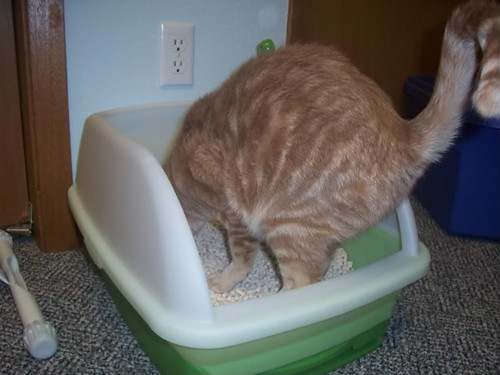
Let's talk about expectations first. Is it just me or do we all just EXPECT a cat to enter our home and know where to poop? Technology, human convenience and laziness on our parts has made it almost an assumption that if you put a litterbox in your home, no matter what size, shape, type of litter or location...the cat will go there. This is obviously not true.


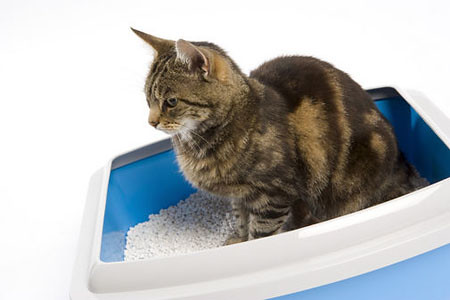
Cats are picky and vulnerable when it comes to dropping their guard and going to the loo. They look for safe and easy places with no complications. Most likely, your litterbox located in the far back washroom, tucked under the sink, filled with colorful, scent fighting crystals will not be as attractive to your cat as it is to you. Kitty is looking for a basic bathroom with an easy entrance, no frills. un-scented, sand-like substances to cover up with and an escape route. The more complicated the picture, the less likely a cat is to be successful in your home environment.


bn272050


Cats are sensitive to change. They can react to sudden changes in environment by making some adjustments of their own. Ever go away for three days and come back to find that your cat pooped on your bath matt? Discovered a smelly gift on your pillow? When routines suddenly break, cats fall apart at the seams. Some adjust and roll with the punches, while others tend to just go south. What can you do to avoid such surprises? Don't ever leave your home! Just kidding. No seriously, it's all about keeping things consistant. Try to have a friend check in and maintain your routines. Sure it's a lot of work, but no one ever said having a cat was going to be a low maintenance partnership.


litterbox3


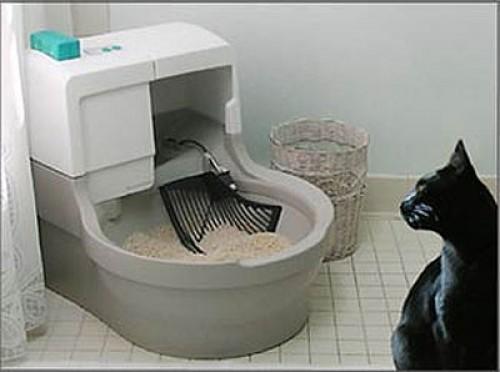
Don't be fooled by gimmicks! No offense to the manufacturers of automated litter boxes, but cats don't generally want a robot to clean up after them. That's your job! Cats need efficient housekeepers that are ready to clean up on THEIR schedule.
Keep you litterboxes simple. Have more than one! Clean them like it's an OCD of yours. Your cat doesn't want to sit on a dirty toilet and neither do you.

Ok, lets review:


  • Find a litter that is appealing to the cat. NEVER use scented litter. Perfumed, chemical scents repel cats. Use a mild dishwashing liquid or hot water and vinegar for cleaning—not ammonia or other harsh chemicals which will leave an odor.


  • Texture is important, too. Generally speaking, the clumping type or gravel type of litter is most acceptable. The sand type is very popular, but as a health precaution for kittens under four months old, it may pose a problem as they may ingest the litter.


  • Cleanliness is absolutely essential! The single most common reason for a cat’s refusal to use a litterbox is because the box is dirty—no one likes a dirty bathroom. Clumping litter should be scooped daily, and the litterboxes washed weekly. Non-clumping litter should be scooped daily and the box emptied and washed every other day.


  • How many litterboxes do you need? Having one box per cat in the household, plus one extra is the best formula for success. Being the individuals they are, some cats prefer to urinate in one box and defecate in another. Some cats will refuse to use a box that another cat has already soiled.


  • Litterbox liners—they are often irritating to cats because their claws catch in the plastic. Covered litterboxes, or ones that are too small for the cat, may cause litterbox avoidance.The best location for litterboxes is a quiet, private place where they will not be disturbed by people or other pets. Noisy areas near washing machines, furnaces or under stairs may frighten the cat away from the box. Never place the litterbox close to food and water dishes.

Wednesday, August 19, 2009

Aloha For Me... Alone Time for Her


By Daniel Quagliozzi


All of us deserve a vacation once and a while. Just some time to get away and go somewhere else, without a care in the world. But, as a cat guardian, it's often very hard to step away from our homes for more then a few days without calling in reinforcements to take care of our furry friends, while we bask in the sun or hike a mountain trail, miles away from home.

donnamatilda2


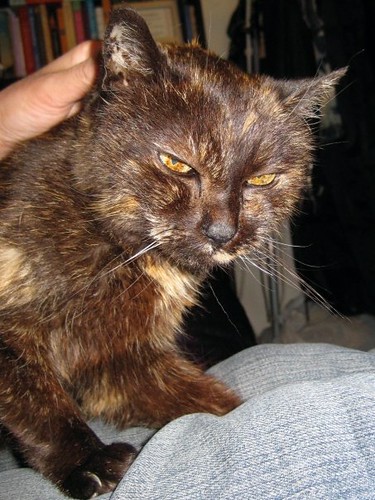
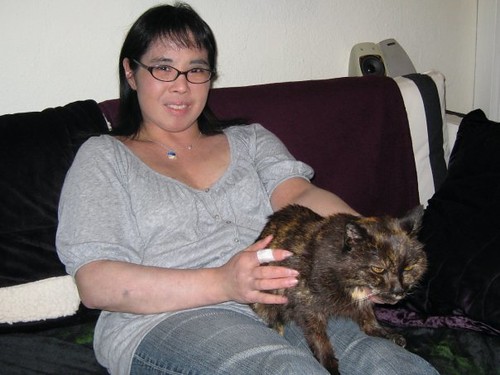
I am extremely fortunate to have friends and colleagues at the SF/SPCA that are available to look after my senior cat, Matilda. In her golden years, Matilda is not the kind of cat that you can just put out a fresh bowl of food and water and leave. She requires a savvy cat sitter who knows her well and can tell if she's feeling a little wonky. With cognitive dysfunctions, spinal arthritis, intermittent vomiting, low appetite and the need for subcutaneous fluids every few days, Matilda is quite the challenge to care for. Again, I am extremely lucky to have a great cat sitter that not only gives her love and attention, but was kind enough to document each day with pictures!

donnamatilda

World's Best Cat Sitter : Donna watches over my broken down cat Matilda


If your cat is lower maintenance, the best thing to do for long absenses is to ask friends or hire a pet sitter to check in – to feed and provide fresh water, clean the litterbox, and groom your cat at least once a day. Ask them to engage in some interactive playtime with your cat. It will provide exercise and mental stimulation, and the exercise can reduce stress. Someone who is familiar with your cat is ideal.

If you are going away for more than 2 weeks, it is best to have someone who can spend the night at least a few times a week while you are away.

When hiring a cat-sitter:

  • Get references from friends, your vet, or local animal rescue.


  • You may prefer to use a pet-sitter who is bonded and insured, and they should offer you references if requested.


  • Ideally, have the pet-sitter meet your cat before you hire them, to see how they interact with your cat.


  • Make reservations early, as pet-sitters can get booked up quickly, especially during holidays.


  • Leave carefully written instructions for the sitter about where food, litter and medications are located. Also note your cat’s preferences for grooming, treats, affection and interactive play.


  • Buy extra supplies in case your travel plans change.


  • Make sure your cat has an ID tag and microchip. Have current photos available in case she gets lost while you are gone.


  • Have a friend who has a back up set of keys and is willing to be an emergency contact.
    Make sure the pet sitter has your contact information for the duration of your travels.


  • Have a written letter authorizing the pet sitter to approve emergency veterinary care in your absence.

  • A written contract outlining fees, method of payment, and the terms of the services offered (amount of time spent with pet, time of day they will visit, other services they will provide such as checking mail or watering plants) is recommended

Boarding


Sometimes there is no choice but to board your cat. Boarding can be stressful, as your cat will be out of their familiar territory, surrounded by strange people, noises, and smells. If you must board your cat:

  • Call ahead of time; kennels book up quickly during holidays.
    Many vet offices and animal hospitals also do boarding.


  • Visit the kennel before committing.
    Many kennels require proof of up-to-date vaccinations, so inquire ahead of time about what shots your cat might need.


  • It’s best to bring along familiar items for your cat – bedding, something with your scent, toys and whatever food they currently eat. Also bring along any medications your cat needs.


  • Give the kennel detailed information about your cat’s preferences and needs, as well as your contact information.

If your cat is staying at someone else’s house…


Although not ideal, sometimes you have to take kitty to another home to stay. A “safe room” should be provided for your cat – away from noise and other animals. Some cats will need to stay in one room for the duration of the visit, depending on how outgoing (or shy) your cat is and how comfortable they are with strangers, other animals, and new environments. Security is a big issue, so make sure there is no chance for your cat to escape (through open windows, cat doors or other doors left open) – if she does she will be lost and far from home.

Friday, August 14, 2009

I Love You, But Please Be Quiet!

Though cats communicate mostly by body language, some cats “talk” more than others. This is could be genetic (some breeds, such as the Siamese, are especially prone to this) and partly a learned behavior. It's even been said that cats have a Manipulative Meow!

meow


Your cat may have learned that if she meows, people will talk to her, play with her, feed her, or even yell at her (trust me, I know this first hand). Remember for some cats negative attention is better than none at all. Some owners love to “talk” with their cats, back and forth, so if you have adopted your cat as an adult, it is possible that this behavior was encouraged by a prior owner. If you have brought Kitty up, then most likely you can think of things that have “rewarded” this behavior. Cats learn to communicate with us, just as we learn to communicate with them. Maybe when the litterbox is dirty, your cat draws your attention to it by walking around and meowing, and so you clean the box. This is how behavior patterns start.

Cats also meow to express discomfort or pain, agitation, and in some cases, territoriality. Unneutered (intact) male cats may yowl in conjunction with sexual behavior, and female cats in heat may meow excessively as well.

If you have a chatty cat, how can you stop or at least curb this habit?

Do Not Reward

This should be the backbone of your behavior modification plan. Pay attention to your kitty when she is being quiet, wait for a moment of silence before you feed her. Ignore her when she meows. If you are having trouble sleeping at night, you can try earplugs, or pulling the cover up over you head! Or you could close the door to your bedroom. Remember that if you break down and give your kitty attention, you will have to start all over again. For more information on how to prevent nighttime or early a.m. wakings, please ask for our handout on nocturnal kitties.


cat_meow_119801gm-a

Make Sure Your Cat’s Needs Are Met!

Cats need attention and interaction, so make sure that somewhere in your daily schedule you allot times for play and petting. Cats like routine and will meow excessively if their routine is upset, so do try to do everything, especially if it’s cat related such as feeding and changing the litterbox, on a set schedule as much as you are able. Provide your cat with stimulation. Keeping your cats indoors is much safer, but they will need to be entertained and encouraged to exercise. Even indoor-outdoor cats need owner interaction and stimulation. New toys, bought or made, food cubes that make Kitty work to get her food, and the occasional catnip toy help keep her from getting bored. Interactive playtime is the best kind of playtime for cats- toys like fishing-pole toys that your cat can chase could be integrated into a daily routine. Make sure your cat has a clean litterbox, and fresh water at all times. Make sure her diet is adequate. .

Be Patient!

It takes time for cats to learn behaviors, and often takes even more time to unlearn them. In order to make a change in your cat’s meowing, you need to be very consistent and give your cat time to adjust.

Recognize When A Behavior Is Not Likely To Change:

You may be able to reduce the amount of attention-getting meowing or feeding-time meowing by ignoring, and feeding and playing at set times, but this will not cure a hard-core talker such as some Siamese or Siamese mix breeds are. These behaviors are characteristic of some breeds, and are not likely to go away in their entirety.


THESE SITUATIONS REQUIRE A DIFFERENT RESPONSE


sadcat2


If Your Cat Is Grieving:

If your cat has recently lost a companion, feline or human or even canine, he may walk around the house and meow, perhaps in search of them or just reacting to the change. While you don’t want to reward the meowing, it is important to give your cat extra reassurance in these cases, spending quality time, preferably on a schedule, until he adjusts to his loss.

If You Have Just Moved To A New Home, Or Have Just Brought A Cat Into Your Home:

It is normal, especially for an adult cat, to be disoriented and unsure in a new environment. Introducing your cat to the house gradually may help prevent some agitation (see our handout on introducing a cat to a new home.) Again, don’t reward the meowing, but be a little understanding in these instances. This behavior usually takes a few weeks to wind down.

If Your Normally Quiet Cat Has Become Very Vocal:

Make sure there is nothing medically wrong with her; schedule a check-up with your vet. Pay attention to environmental changes to see if something could be bothering her, such as a new stray cat coming by your back door.

Tuesday, August 11, 2009

In or Out? How to make up your mind

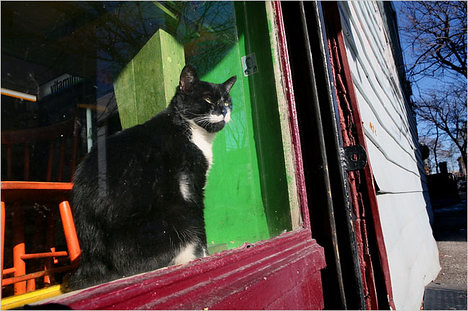
When people think of the ultimate living situation for a cat, several ideal scenarios may come to mind. Some may think that keeping their cat(s) indoors is safer, while others do not want to take away the quality of life that an outside animal has, justifying their cats need to go outside as more natural or instinctual. Does an indoor cat miss anything by never going out? Does an outside cat have a better life because it can choose it's own territory and lay in the grass?

CatOreoBroolynDeli-thumb-468x311

A major risk for outdoor cats, and one we hear about all too often, is being hit by a car. Cats can also get stuck in many compromising situations, under houses or crawl spaces where they can become dehydrated or starve. Encounters with other cats can expose your cat to diseases, some of which cannot be vaccinated against, like FIV & FELV. Finally, there are people who simply do not want cats in their yard. These disgruntled neighbors may trap your outdoor cat and take him or her to the animal control center or far far worse punishments. Yikes, I shudder to think about it sometimes.


Fortunately, there are many ways to help your feline friend to have a happy, fulfilled life indoors or to allow your cat a safe outdoor experience.

Making The Outdoors Safe

If your backyard has a fence around it, consider installing a Cat Fence .This netting system prevents your cat from leaving the yard, so you know where he or she is at all times. It can also be used to keep other cats out of your yard.

Build an enclosure outside. This allows the cat to have an outdoor experience while remaining safe. Check cat magazines for ideas and plans.

catharnessoutside
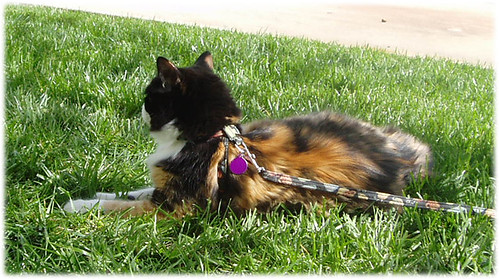
If you have a younger cat, train him or her to accept a leash and harness. This way, you can take the cat on monitored outdoor excursions. While a few brave cats may enjoy walks around the neighborhood, the majority will prefer sticking close to home—the front or back yard.


staring


Transitioning A Cat To Indoors Only

This isn't going to happen overnight folks. Hang in there and make some adjustments to your home and maybe even to your lifestyle. You will have to make Small compromises to make your cat happy

catsun

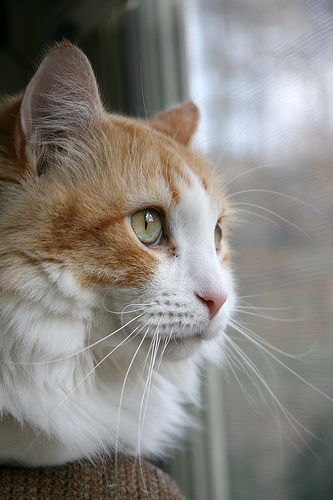
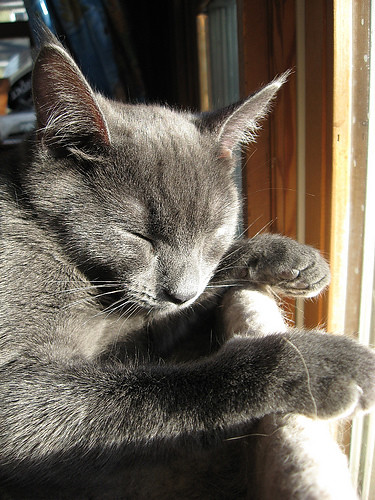
Put screens on your windows and get a kitty window seat.

Play with your cat more. Get him running around, chasing a string or other toy several times a day. A little catnip makes it even more fun!

DSCF3300
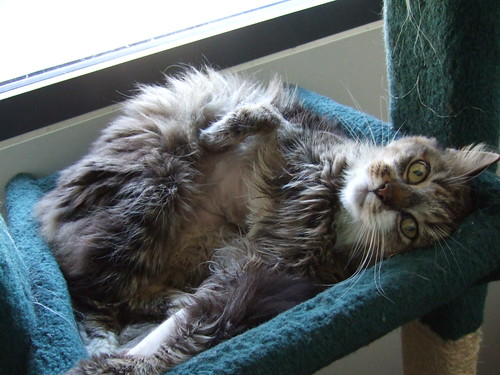
Add vertical space to the cat’s territory. Cat trees, cat condos, shelves, and other climbing apparatus give your cat more places to climb, play, and call her own.


Provide scratching posts. Try posts made of different materials—corrugated cardboard, wood, carpet, or sisal rope. You can get freestanding scratching posts, floor level, or door hanging varieties.
51399878_IMG_0616VideoCatnip2
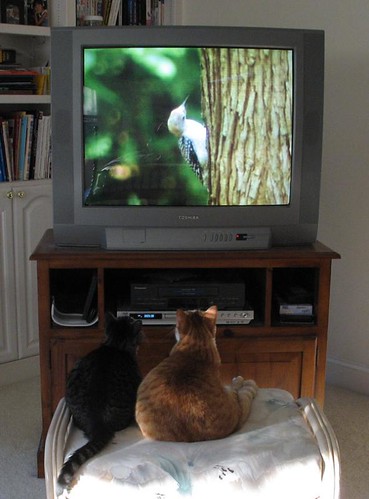
Play videos. Many cats enjoy watching videos of cats, birds, fish, insects and nature scenes. Check your local pet supply and video stores.

catkittygrass[1]
Grow kitty grass. Available at many pet supply stores, it is safe and tasty for your cat to nibble.

If your cat is an “only child”, consider adopting another to keep him company. That would make The SF/SPCA, You and your cat very happy!

2009_06300031

Remember: even indoor cats should always wear an elastic or breakaway collar and an identification tag. In an earthquake, fire, burglary, or other mishap, a cat can easily become lost outside, and identification is her best bet for getting home.