Showing posts with label vet visits. Show all posts

Monday, July 20, 2009

Senior Moments: Caring for your elderly cat

By Daniel Quagliozzi

2007_04010077


After yet another visit to the veterinarian with my 18 year old cat; Matilda, I decided it may be a good time to address what it's like to care for a senior cat. You may remember Matilda from previous posts such as : My Alarm Clock Is Hungry & My Cat Made Me Do It. This time around, the exam shows the onset of kidney disease. As it is, I give Matilda subcutaneous fluids a few times a week to keep her well hydrated and functioning as normal as possible. Although, Matilda habitually defies normalcy, as you can see in her other stories. Her failing health, coupled with cognitive dysfunction (Catzheimers) make caring for her a lesson in life's mysteries.

Sure, there are challenges, disappointments, reality checks and unknown territory behind every corner, but I have news for you.... Some day, your cat will grow old too and it will suddenly occur to you that kitty is not the sharp, nimble footed acrobat s/he once was. Caring for elderly cats is not as bad as some make it out to be. It's just life's reminder that nothing lasts forever. Why not help your cat along the way with dignity and grace?


When is a cat considered a senior?

Cats often initially show age related physical changes between the ages of seven and ten years. Most human companions will notice differences, both physically and behaviorally in their cat, by the time the kitty is twelve. In my case, I started to see signs of aging in Matilda around fifteen. It's been a long three years since then!

You may notice some of these common signs of aging in your cat:

Many cats will have some difficulty jumping or climbing onto higher surfaces due to arthritis.

  • Your cat may be less diligent about grooming himself. (Their hair can appear matted or greasy)
  • Changes (in environment or routine) may be more difficult to adjust to.
  • Increased vocalization, or meowing is louder than usual.
  • Your cat may sleep more (ok, more than usual).
  • Decrease in energy and zest for play.
  • Change in appetite or refusal to eat.
  • Litter box avoidance or aversion.
  • An increase in aggression due to pain or confusion.
  • Some cats become more relaxed and mellow, and may be more accepting of petting or medicating.

Ways to Accommodate an Older Cat’s Special Needs

ramp-cat


For cats with arthritis or joint pains, ramps or stairs covered with carpeting are helpful to make access to sofas, beds, or other favorite resting places easier. There are also elevated food and water dishes available if your kitty has trouble with neck pain.
50217151


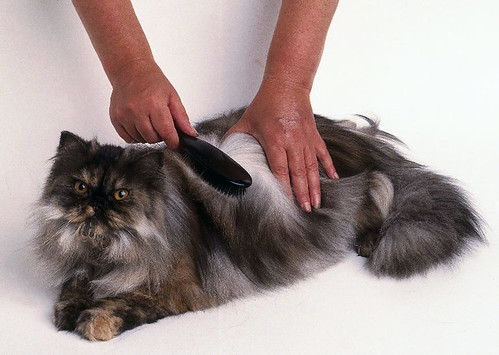
If your kitty is not grooming well, you will need to help out. Matted coats, particularly on long-haired cats are unhealthy and uncomfortable. Regular grooming is good for their fur and for skin-circulation, and many cats enjoy being brushed. Try a few different style brushes to see which your cat prefers.


Hear no evil, See no evil, Taste no evil


As hearing and sight become less acute, you may notice you cat lumbering around the house or even hiding as a result. Adding night lights or providing extra light in general is a thoughtful accommodation. If blindness appears suddenly, then it will be more obvious with the cat noticeably bumping into furniture or walls. Restricting territory or padding sharp corners of low furniture will prevent injury. In the case of hearing loss, a lack of response to sounds, coming when called (most cats ignore you anyway), or an increased vocalization or disorientation may also be apparent.

Some cats will become picky about food. This is best discussed with a veterinarian as it can indicate a tooth/gum condition or other health problem. However, some elderly pets may just need to be tempted to eat. It can help to feed smaller, more frequent meals. They may be more responsive to fresh food, or food that has been gently heated, as they can often smell it better. Older cats need to drink plenty of water, and it may be necessary to try several different water sources to insure they are drinking.


Routine is the key!
50050226_6e842c148b

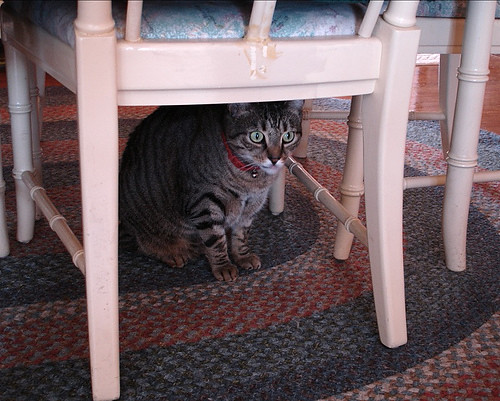
Adjusting to sudden change is difficult for most cats, but more so for older kitties. Make any changes in the environment or routine gradually. Something as simple as a variation in daily schedules can be an upset. Trying to keep as much routine as possible for your cat will be very helpful in reducing stress. This means keeping cat bedding and furniture in its usual place, and having regular times for feeding, cuddling, grooming and other interactions each day.
CB040437


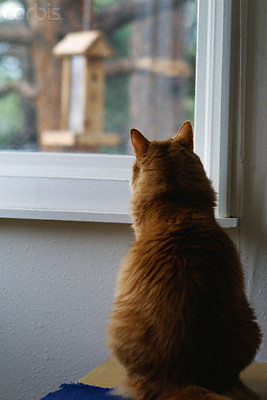
Gentle exercise is a great stress reducer and can maintain health. This gives them a chance for mental stimulation without a lot of physical activity. Having a spot in a sunny window to observe outdoor wildlife might be fun, too.

Preventative and Basic Care

Your senior pet should have a full examination by a veterinarian every six months, even if she seems perfectly healthy. If medical problems are diagnosed and treated early on, the treatment may be more effective and less costly. Some degenerative processes can be slowed down when detected early. These regular check-ups are the time for you to discuss with your vet any changes in behavior, appetite or sleeping habits.

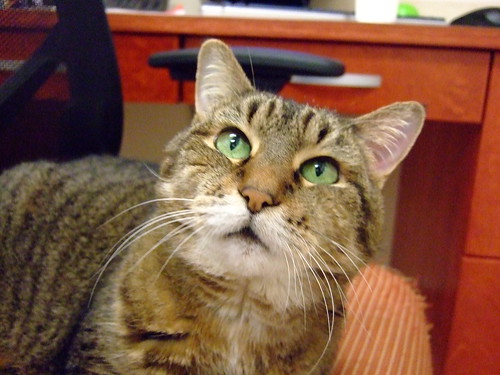
We love them when they are kittens, but when they grow old they need us most. Shelters across the country have many senior cats that are looking for compassionate humans to watch over them in their golden years. Please check out amazing cats like MONKEY!
2009_06300086

MONKEY 16 yr old with plenty of pep!

Monday, July 6, 2009

The SF/SPCA: A vanguard in modern shelter management

2009_06300026
Ernie ID #: 5748427


This week, we are featuring articles by Barbara Kohn of http://www.examiner.com/ . She is doing a three-part series about the San Francisco SPCA and our amazing programs that are truly changing the ways people think about animal sheltering. Like many of us, Barbara is very passionate about cats and it shows in this great article and all of her other work!

Friday she will be featuring an interview with The SF/SPCA's Cat Behavior Specialist; Daniel Quagliozzi.

Check out the first installment!!

"The SF/SPCA is the oldest animal welfare organization on the West Coast of the United States. Founded in 1868, this humane organization has been serving the needs of lost and abandoned animals in San Francisco and its surrounding communities for its 141 years. Adding to its many achievements, its historic collaboration with the City of San Francisco and the San Francisco Department of Animal Care and Control made San Francisco the first "no-kill city" in the United States in 1994."

READ MORE by clicking the link below:

The San Francisco SPCA raises the bar on shelter management for cats

Posted using ShareThis

Friday, May 22, 2009

Velcro Kitties: Pointers for 9 to 5 guardians and their over-attached cats

By Daniel Quagliozzi


1569238224_5fe6892559


For those of us lucky enough to be working these days, a nine to five gig is a blessing, but for our housebound feline room mates, this time of the day can be downright traumatic. The consequence of forming a tight and routine bond with our animals can often be displayed as anxiety when we leave the inner sanctum and decide to leave for the day.


Cats are solitary by nature. They can get along just fine without the company of another cat, although there are many exceptions to the rule. While maintaining a life of independence, they tend to bond strongly with their human caretakers, even when they are paired off. After all, we are EVERYTHING to them! Humans are the providers of love, conversation, physical comfort, food, water and interactive play. Another cat simply can not provide this.


How do you know if your cat is stuck to you like Velcro? My guess is.... you won't even have to ask this question!


Signs Of Feline Separation Anxiety


  • Over-attachment to the owner such as following the person to every room of the house (heal chasing).

staring


  • Distress as the owner prepares to depart: This can take many forms, but some of the more common reactions are meowing, sulking, apparent depression, slinking away and hiding. (No, seriously it's true!)

    cat-kitten-cute-picture-photo-meow-closeup


  • Vocalization (crying, yowling, meowing) right after the owner has left or even when you are sleeping.


  • Anorexia – the affected cat is often too anxious to eat when left alone.


  • Inappropriate elimination – often in the form of urine marking. Deposits of urine or feces are often near to the door from which the owner has departed or are on that person’s clothing, bed sheets, or places like bath mats, rugs and behind or under furniture.


  • overgrooming2


  • Excessive self-grooming. This starts as a displacement behavior but can progress to compulsive self-grooming if unchecked. See: Don't Lose Any Hair Over It

    Kitty%20Scratches%20Door


  • Destructive behavior – rare, but some cats may claw and scratch door edges presumably in an attempt to escape their solitude. This can also happen while you are sleeping to get you to wake up and give them attention.


  • Exuberant greeting behavior – as if greeting you after you left on a long vacation. ( Where have you been ?!?!?!)

Here come the solutions!


Enriching the cat’s "home alone" environment is the key to success! This can be achieved by means of:


CB040437


Giving the cat a view of the outside world! Add climbing structures, cat trees, open windows with screens.

Strategically position bird feeders near the windows with a view.


jj_relaymousechase


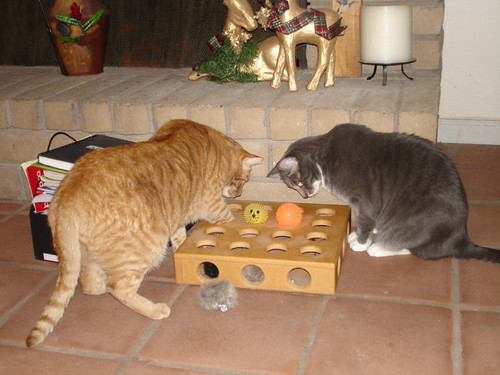
Leave toys all over the house and change it up every now and again. The same defeated mouse that your cat played with two days ago is no longer a challenge. Hide toys in creative places like the peek-a-boo box above.

Putting the day’s ration of dry food in a puzzle toy will keep your cat focused on eating instead of your absence. Although cats with separation anxiety tend not to eat when left alone, hunger is a great motivator when other sources (YOU) are no longer available. Some caveats apply if cats refuse to eat for more than a day or so. Consult your local vet if this turns out to be the case and try to work out some kind of compromise. It can get tricky.

Leave the radio on. The "white noise" effect of the radio drowns out the otherwise perturbing sound of silence. We find that classical music has positive effects on loneliness.

If behavior modification by independence training and environmental enrichment do not work it may be necessary to resort to anti-anxiety medication for the cat for a while. Consult with a veterinarian about the use of drugs like Prozac to help calm an anxious kitty.


Ok, Now go to work and rest assured that kitty is not making long distance calls, ordering pizza or rearranging your apartment while you are away.

Wednesday, May 6, 2009

BREAKING NEWS: 5/6/09

cat-on-keyboard


Litter Did You Know... does it Again!!! For the second month in a row, the official blog of the San Francisco SPCA Cat Behavior Program has broken records and gained even more notoriety. According to http://www.sfgate.com/readerviews/ LDYK is among the top 5 most recommended blogs and also listed as one of the top 10 most read blogs on their site for the month of April.

Be sure to spread the word about our blog. If you would like us to cover a topic, please email Daniel & Jamey at catbehavior@sfspca.org


WE NEED FOSPICE PARENTS!!!!


Would you be willing to give a home to a hospice cat? We are currently taking care of a number of cats that have terminal medical issues. These delicate cats would thrive in the comforts of a home environment and would be much happier having someone special to care for them until the very end. It takes a strong and understanding person to take on this role, but the importance of what you are doing is immeasurable. Do you have room in you heart for a special cat?

If you are interested in being a Fospice volunteer, please contact Alison lane at alane@sfspca.org or call (415) 522-3642


UPCOMING BLOGS:

"The Cat Made Me Do It" starring Matilda the cat .... Are you being trained to do strange tasks to accommodate your cat?

With Guest Blogger SF/SPCA Volunteer Rod Kilpatrick

Cats & Kids ....How to select the perfect cat for your household

Cats & Dogs .... Introducing your new feline addition to a resident canine companion

Haven't been to the new Leanne B. Roberts Animal Care Center? Check out the new digs from a pet's eye view!

Leanne B. Roberts Animal Care Center

201 Alabama StreetSan Francisco, CA 94103

415.554.3030

Open Seven Days a Week8 a.m. - 6 p.m (except holidays)

View Map »

Free Client Parking in The SF/SPCA Lot at Alabama & Treat Streets.

Monday, May 4, 2009

CINCO DE "MAYA"

By Daniel Quagliozzi


maya


We devote today's blog to an extraordinary little lady that needs your help. Maya, an older, more reserved brown tabby female is an equisite creature with a dynamic personality that has warmed the hearts of so many people, yet no one has made the decision to take her home. Like many homeless cats, you might say the odds have not been in her favor. Today we roll the dice for Maya!

DSC_0300


You may remember Maya from several blogs ago. She has made many transitions since she first arrived as a surrender to Animal Care and Control of San Francisco. Maya spent weeks living in the Cat Behavior Office as our Shelter vets worked to get a handle on her arthritis, which was causing her to limp when she attempted to walk. In our opinion, the slight limp and smirky look on her face only made her that much cuter. I am not embarrassed to say, Maya really touched me and actually made me "do the math" about bringing her home to my resident cat. It just wasn't realistic and I'm sure my Matilda would have been mad at me for doing so.

Now, after a few months of maintenance on her joints, Maya is walking a lot better but still has a rough time getting up after she has been sleeping off another one of her victorious play sessions. Despite her aches and pains, she remains to be the most awesome cat anyone could ask for. The question is, who's asking?


Maya2


Beautifully mature cats like Maya are often over-looked when shelters are bracing for the storm of young and vibrant kittens that arrive when the weather gets warm and the rain subsides. While it's still an admirable thing to adopt a kitten from your local shelter, please do not forget the older cats that need your home as well. They have a prior life and a story to tell, a quality that no kitten can relate to.

Older cats are deeply effected by the change of losing everything that they once held close in exchange for a strange and unfamiliar kennel space and the company of one stranger after another. Kittens adapt a lot faster and stay in shelters for as little as two days to a week before they find a home. An adult cat may spend anywhere from one week to five months living in a shelter environment.


DSC_0308


At the age of 10, Maya is the perfect example. She ended up in a shelter due to circumstances beyond her control. Her life and well being are now under the watchful eye of many caring individuals at the SF/SPCA. What's missing in her life is the love of one or many people who will wake up everyday and include her in their lives. Maya craves a day that she can predict and a human guardian that she can call her own. She needs a home with guardians that will keep her on top of her game and watch over her health. An environment with steps or high levels to climb may be too much for her stubby little legs. However an inventive person might create a place for her that makes getting up high an easier task to accomplish. Maya prefers to be a people's cat and not a cat friendly cat. She was actually adopted once but was unfortunately returned to the shelter because she did'nt appreciate the company of other cats.


Today is MAYA MONDAY and tomorrow is CINCO DE MAYA ...but the reality is that every day of the year is dedicated to those cats who do not have the voice to ask for help. Will you be there for Maya?


Make the month of May the month for Maya!


If you are interested in adopting this amazing feline friend, please contact the SF/SPCA by calling 415 522-3500 or come to Maddies Adoption Center at 250 Florida Street, SF, Ca 94103


Friday, May 1, 2009

My Cat Ate My Snuggie™

By Daniel Quagliozzi

Has this ever happened to you? You're getting ready for another day at work and you decide to wear your favorite blouse...the very same blouse that has been sitting on the back of your chair for a week because you were too lazy to put it away after you got it back from the cleaners. As you put your arm through the sleeve, you notice there is a soggy hole in the side. Your cat has chewed another chunk out of your wardrobe. What the @*%!?!?! Guess what? Your cat has PICA!

wool3


What Is Pica?

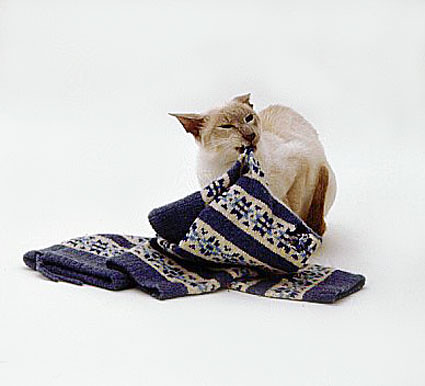
Pica is the term for the repeated ingestion of non-food objects. Accidents will happen, this is true. Sometimes cats will unintentionally eat an object like yarn, string or even a plastic cord. It probably looked like a snake to them? Can you blame them?


Keely_Chewing_on_Plastic_Cat_Rubbing_Toy_3-22-8


Pica is quite different and happens when cats deliberately chew and swallow inedible materials. Common targets include wool blankets, plastic coated wires, rubber, plastic bags, even thumbtacks, hair ties & spare change . Often, individual cats will have different preferences- so the cat that eats wool may not eat rubber, or the cat that tries to eat your bobby pins may frown upon your hipster sweater. Some cats have a broad range of preferences. Though it might seem amusing to some people, it could result in a lethal ingestion for your cat. Yarn can get wound up in the digestive system and plastic can obstruct major organs. Luckily, most of the time, PICA is more annoying then it is deadly. No one wants to come home to find a huge soggy hole in their favorite shirt.

Wool%20sucking


No one really knows for sure what causes this kind of eating disorder. Some veterinarians attribute it to a lack of fiber in the diet while behaviorist's may claim that it is caused by boredom or anxiety.


woolsucking


To rule out medical causes, a veterinarian should examine all cats displaying pica. Once your veterinarian gives your cat a clean bill of health, discuss with them what steps you can take to modify your cat's behavior. These may include the following:


1. Remove targeted items - Placing clothing, blankets, plastics and electric cords out of the reach of your cat is often the easiest solution. Storage containers, electric cord guards, and other useful items are available at most home supply stores. The upside of all of this is that your house or apartment is going to be super clean! NO MORE CLUTTER! I wish my cat had PICA. It would be great incentive for my wife to stop collecting shoes.


2. Provide alternative items to chew or eat - Food-dispensing toys, durable cat toys, or pieces of rawhide can be used to redirect your cat's chewing behavior to more appropriate and safe items. For cats attracted to houseplants, small flowerpots of grass or catnip can be planted and kept indoors.


3. Provide lots of structured play - Many cats chew on household items out of boredom. Provide interactive toys and set aside time each day to play with your cat. As mentioned in many blogs prior, exercise, play and environmental enrichment provide stimulation that will cure most miss-behaviors. A bored cat has more time to focus it's energy on misbehaving while an active and distracted cat will not have the time of day to devote to such foolish activities.


4. Increase dietary fiber - It may help to increase the amount of fiber in your cat's diet. High fiber foods usually contain fewer calories. Your cat may be able to satisfy their craving to eat more while still maintaining their weight. Consult with your veterinarian before making any changes to your cat's diet.


5. Make targeted items aversive - Occasionally, applying aversive substances (e.g. hot sauce, Bitter Apple®, Bandguard®) to an item may deter a cat from chewing it. If this is not possible, spraying strong smelling substances (e.g. citrus air freshener, potpourri) or using physical deterrents (e.g. upside down carpet runner, Ssscat®, Snappy Trainers®) around an object may prevent cats from approaching. Eventually, your cat will get tired and stop heading for the same places of obsession.


6. Consult with a veterinary behaviorist - If your cat continues to ingest non-food items, referral to a veterinary behaviorist is recommended. Further environmental and behavior modification plans, specifically tailored to your pet, may be needed. In some cases, medication may be helpful. Anti-anxiety medications can lower stress levels and help to subdue the ingestion of non-food items.

chew


Hopefully, with the right guidance and a little bit of tidying up, your cat will no longer bite off anything bigger than they can chew! Buy more cat toys!!!!

Friday, April 24, 2009

It's FIV Awareness Weekend At The SF/SPCA

By Daniel Quagliozzi


This weekend, The San Francisco SPCA is spotlighting three beautiful and unique cats. The one thing that they have in common,besides there awesomeness, is that they all have FIV. Now, the question many of you may be asking is....

What is FIV?

FIV stands for feline immunodeficiency virus, just as HIV stands for human immunodeficiency virus. In fact, these two viruses are closely related and much of the general information that has become common knowledge for HIV also holds true for FIV.

FIV is a virus that causes AIDS in cats; however, there is a long asymptomatic period before AIDS occurs. Some cats are compromised and may live shorter lives while other can have long lives full of enrichment. It's our job as humans to keep these cat's indoors and smothered with love and proper medical attention in order to give them the quality of life that they will need to carry on. Serious colds can easily turn to pneumonia, so its important to be aware of your FIV cats health at all times.

How do cats get FIV?

The major route of virus transmission is by deep bite wounds that occur during fighting. There are other means of spreading the virus but they are less common. Mother cats cannot readily infect their kittens except in the initial stages of infection. FIV can be transmitted sexually and via improperly screened blood transfusions. Casual contact such as sharing food bowls or snuggling is very unlikely to be associated with transmission.

How do I protect my cat?

The best thing that you can do to protect your cat from FIV is keep it indoors. With the most common route of transmission being cat fights, especially bite wounds, an indoor lifestyle is a sure fire way to avoid getting the disease. Of course, keeping cats vaccinated is a good precaution to decrease health risks but unfortunately it will not deter the disease. There is no vaccine for FIV.

A Shelter Reality

In many shelters across the country, cats with FIV are very hard to place in homes. They have to live solo lives or be co-housed with other cats that share the infection. This limits their chances of finding loving homes and increases their risk of being euthanized. At the SF/SPCA we try very hard to keep our clients informed about these cats and try to pair them off whenever possible. A great example of two cats that have FIV and were strangers before they became homeless.... are Puff Daddy & Norman!

puff3

puff

NORMAN1

Puff Daddy & Norman met and made friends at the SF/SPCA. They got along really quickly and have been roommate's ever since. Both of them love attention and will break into spontaneous play sessions whenever the mood strikes their fancy. They will do well together, solo or with the company of another cat -friendly resident cat. Look at those cheeks on Puffy!! Like many male cats that have lived outdoors, Norm & Puff show the tell-tale signs. Both cats have the battle scars and tipped ears to prove it. Those days are over now, paving the way for a calmer, gentler future.


Scarlett2

Scarlett is a little more reserved than her two buddies. She prefers to live by herself, can be a little hesitant at first but warms up super fast. She's a dignified lady with subtle charms that cast upon you like a love spell. Before you know it, you're full filling her every wish. She's a classy girl with cat appeal that will draw you in like a tractor beam. Scarlett will do best in a quieter environment with patient and heart felt guardians willing to provide her with all her desires.

FIV is a disease that may limit their lifespan, but it doesn't change their amazing personalities and uncanny ability to change our own lives. Just because they are immune compromised does not put limits on the love they have to share. You can learn a lot from a cat when you know their time may be limited. It's a win-win situation! You get to provide a beautiful animal with a home and your new friend gets to unconditionally change your life forever.

Open up your heart and your home to an FIV cat this week. If you would like more information about FIV cats or would like to give one of these three fabulous cats a chance, please call The SF/SPCA Adoption center at 415 522-3500 or email us at catbehavior@sfspca.org


If you do not live in the Bay area, please remember, FIV cats are being surrendered to shelters all over the globe!

Enjoy this short clip of Puff Daddy in action!!!

Friday, April 10, 2009

Who Are You And Where Have You Been?

By Daniel Quagliozzi


standoff5


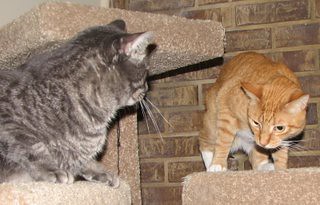
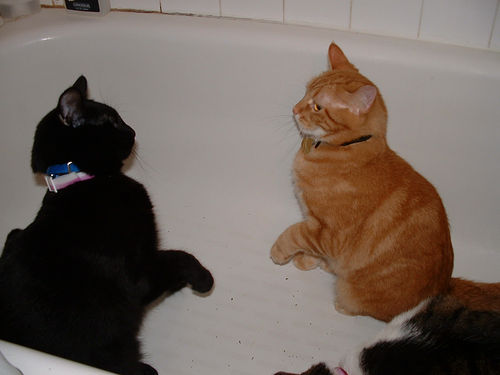
A trip to the vet can be a stressful situation for some cats, leaving behind everything and everyone they know for a strange and unfamiliar place, full of sights, sounds and smells. Then, if the vet visit wasn't unpleasant enough, the cat that was left at home is greeting your poor sickly kitty with hissing, growling and in some extremes... aggressive attacks, leaving you standing there wondering why it seems like they are strangers to one another other. Why do cats fail to recognize each other when they return from the vet?


standoff


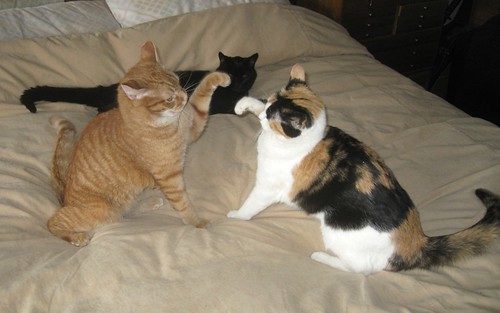
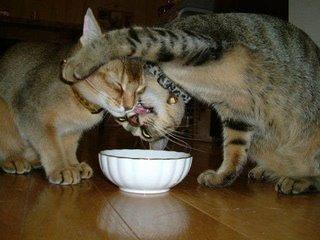
Non-recognition aggression is actually quite common. A sudden change in routine, a new or unfamiliar scent or a stressful addition to a cat's environment can set them off on a chain of aggression that could last days or even weeks if someone (that's you!) doesn't intervene. Sometimes, even cats need a referee!


standoff4


How do you get your cat's to take the boxing gloves off and appreciate each other once again? It's a slow process that takes patience and a little understanding, but ultimately... it's worth the sacrifice to your daily routine of couch potato-ing.


standoff2


Rule #1.


Separate the cats!


Give everyone, including yourself, some time to breathe and relax.


Rule #2.


Start some positive reinforcement!


While your cats are confined away from each other, try feeding them on the outside of the same door. Hopefully they will associate the pleasure of eating and the scent of each other together.


Rule #3.


Crack open the door!


If the cats are eating in harmony, crack the door and let them see, sniff and interact. If they growl or hiss, close the door and start again later.


Rule #4.


Initiate play!


Get your cat's playing with each other to ease the tension. It's amazing how fast they will remember they were buddies over the slaying of their favorite toy.


Rule #5.


Try Feliway to diffuse the situation!


A pheromone spray like Feliway ( http://www.feliway.com/) can make cats feel more at ease in their territory as it mimics facial pheromones that they normally interpret as calming or positive. It might be good to spray some Feliway around before and after a visit to the vet.


harmony


By following some these simple guide lines and doing a little preparation before you cat goes off the the vet, you can make the experience a pleasant one for all parties. Now, if we can make going to the dentists office a delight, we would be all set.