Showing posts with label aggression. Show all posts

Monday, May 11, 2009

When Cat Meets Dog....The road ahead can be rocky

By Daniel Quagliozzi


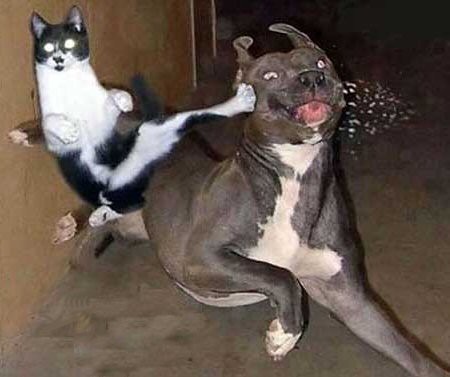
Ninja-Cat


In all my years of working with cats in a shelter environment, perhaps the most popular question asked is; "Can you help me find a cat that will get along with my dog?" As simple as this question may appear to be, it's a huge math equation that requires a predictive approach to finding the answer. It involves guess work, prior knowledge about the independence and gregariousness of the cat and also some background on the resident dog. To put it frankly, it's very hard to answer without thumbing through an entire list of animals and trying to imagine them adapting.


So, to make things simpler for all of you to make these decisions on your own, I have compiled some tips to help you out with the search for the ultimate dog-friendly-feline.


Smoothing Out the Rocky Road Ahead:


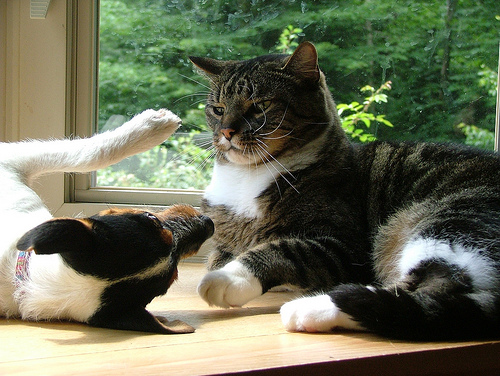
The best predictor of how cats and dogs will get along together is their background. Have you walked past a cat with your dog? Did it growl, bark or lunge, or did it just get curious or not care? Audition your dog on leash with a willing cat that already has dog experience – they are less likely to run away and pee on your brand new Ikea sofa. It’s also good to try out the same cat on more than one occasion and to try out more than one cat. The trick will be finding this brave and un-frazzled feline. Some cats, or shall I say most cats ...will want nothing to do with this experiment.


2743131580_f22d7cdb01


Read up on the cats past history. If you are adopting from a shelter, ask the adoption staff to dig up any information on the cats prior experiences. This will be essential in trying to imagine how it will be effected by a dogs approach, play and general cohabitation.


Be aware that certain dog breeds are hard wired to chase small prey. A feisty terrier that digs holes in your yard and brings home dead critters may not be a good companion for a 2 month old kitten. Predatory types are much more stressful for cats and must be constantly managed when around the cat if they are to live with one. Predation is not something a dog can be easily trained not to do as it is deeply ingrained.


dog-cat-2


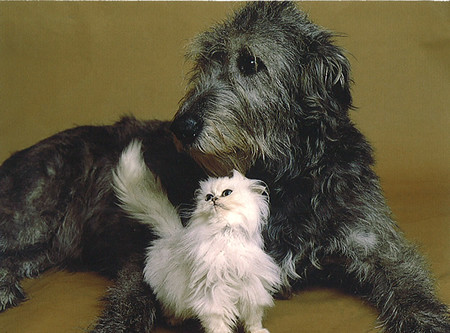
Cats who have not been socialized to dogs will almost always behave defensively, by fleeing and/or with an aggressive display the first time they encounter a new dog. If the dog does not come on too strong, and if the cat is given dog-free zones to retreatto, many cats will gradually get used to the dog and sometimes even become bonded.


Ok, So you did it. You combined a cat and a dog. What should you do to make your home more appealing to both?



extra-wide-walk-thru-gate-with-pet-door


  • Have a “safety room” or rooms as well as high places the cat can access but the dog cannot. Baby-gates, cat doors and clearing high surfaces can accomplish this. It is important that the cat can retreat to regroup and relax away from the dog and then venture forward into “dog territory” at her own pace. The cat should have access to food, water and litter in this area so no interactions with the dog are forced.
catcarrier


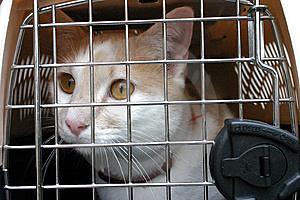
  • Never force the cat (or dog) into proximity by holding them, caging them or otherwise restricting them from escaping. This is defintely not going to help matters. Aside from it being inhumane, stress is a common reason for cats to break litter box training and nobody wants that!


  • For the first introduction, have the dog on leash in case he decides to chase. If it seems to be going well, take the leash off and supervise closely.


  • If the dog is behaving in a friendly and/or cautious way, try to not intervene in their interactions, except to praise and reward the dog for his good manners.

article-0-02A6A631000004B0-556_468x532


  • Interrupt any intense chasing and try to redirect the dog’s attention to another activity – this is very difficult so you may be forced in future to manage the dog on-leash around the cat until you have worked out a routine or divided up the house.

CatAttack2


  • In the first few weeks, observe the trend: are things getting better or worse? Monitor interactions until there is a pattern or plateau in their relationship.

13-dog%20and%20cat


  • If the dog is the newcomer, be sure to give plenty of extra attention to the cat so she does not associate this change with reduced attention and affection. If the newcomer is a cat, it’s also a good idea to make sure the dog associates the new intruder with good things for him. Shoot for positive associations always.


CaughtDogInLitterBoxNyx


  • Dogs should not have access to the cat litterbox – it is too stressful for the cat and the dog may eat cat feces and litter. Most dogs will also eat cat food the cat leaves behind – we suggest feeding cats in the cat’s “safe” room or on a high surface.
dog,%20cat,%20rat

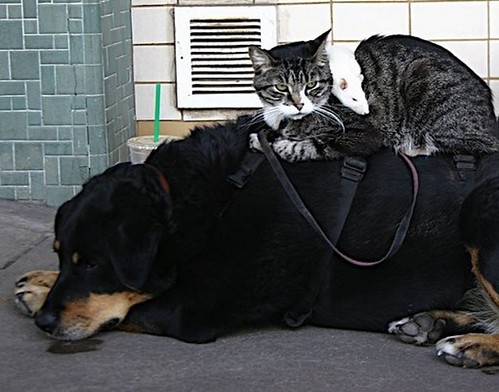
If you are successful with getting the dog and cat to live in harmony, perhaps you want to try adding a rat for good measure?


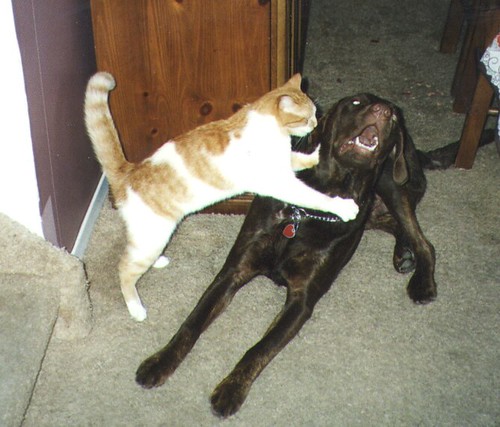
P.S. we purposely chose pictures for this blog where the cat had the upper hand over the dog. Sorry dog lovers, Litter Did You Know is all about the CATS!!!!!

Friday, April 10, 2009

Who Are You And Where Have You Been?

By Daniel Quagliozzi


standoff5


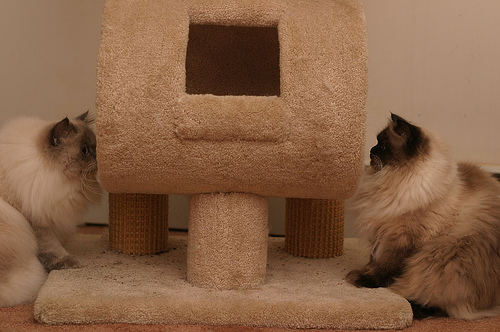
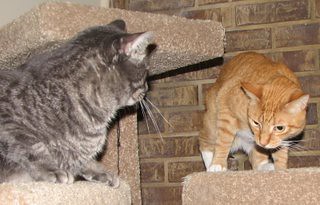
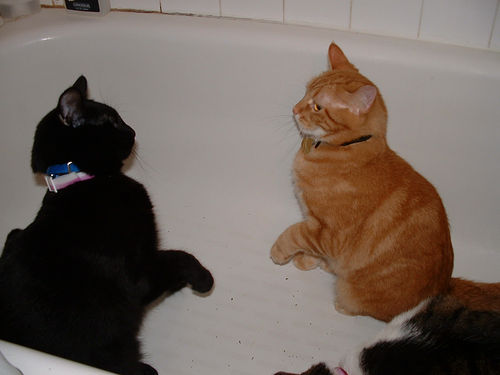
A trip to the vet can be a stressful situation for some cats, leaving behind everything and everyone they know for a strange and unfamiliar place, full of sights, sounds and smells. Then, if the vet visit wasn't unpleasant enough, the cat that was left at home is greeting your poor sickly kitty with hissing, growling and in some extremes... aggressive attacks, leaving you standing there wondering why it seems like they are strangers to one another other. Why do cats fail to recognize each other when they return from the vet?


standoff


Non-recognition aggression is actually quite common. A sudden change in routine, a new or unfamiliar scent or a stressful addition to a cat's environment can set them off on a chain of aggression that could last days or even weeks if someone (that's you!) doesn't intervene. Sometimes, even cats need a referee!


standoff4


How do you get your cat's to take the boxing gloves off and appreciate each other once again? It's a slow process that takes patience and a little understanding, but ultimately... it's worth the sacrifice to your daily routine of couch potato-ing.


standoff2


Rule #1.


Separate the cats!


Give everyone, including yourself, some time to breathe and relax.


Rule #2.


Start some positive reinforcement!


While your cats are confined away from each other, try feeding them on the outside of the same door. Hopefully they will associate the pleasure of eating and the scent of each other together.


Rule #3.


Crack open the door!


If the cats are eating in harmony, crack the door and let them see, sniff and interact. If they growl or hiss, close the door and start again later.


Rule #4.


Initiate play!


Get your cat's playing with each other to ease the tension. It's amazing how fast they will remember they were buddies over the slaying of their favorite toy.


Rule #5.


Try Feliway to diffuse the situation!


A pheromone spray like Feliway ( http://www.feliway.com/) can make cats feel more at ease in their territory as it mimics facial pheromones that they normally interpret as calming or positive. It might be good to spray some Feliway around before and after a visit to the vet.


harmony


By following some these simple guide lines and doing a little preparation before you cat goes off the the vet, you can make the experience a pleasant one for all parties. Now, if we can make going to the dentists office a delight, we would be all set.


Monday, April 6, 2009

Give Your Cat An Over-Stimulus Plan

By Daniel Quagliozzi


Just like people, cats are unique is so many ways, especially when it comes to petting and playing. Of all the activities a human can provide for a cat, they seem to love these two activities the most. Probably because it's near impossible for a cat to pet itself or wave a toy around. This my friends... is why we were put on this earth. Hands were made for petting cats, holding toys and opening cans of food! Well, from a cat's point of view anyway....


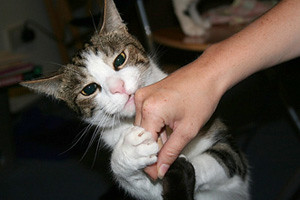
bite


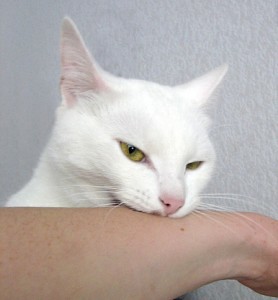
Your cat may think that your hands are only for petting and show no interest in an interactive toy. Or...perhaps your cat gets confused about your hands all together and decides to give you a bite whenever the opportunity knocks? The question is, when is it ok to pet and when should you stop?


Cats can get overstimulated from petting the same way humans can get annoyed from a bad back rub or too much physical interaction. Sometimes, you simply do not want to be touched or talked to for that matter. Ever get on a crowded bus after a long day at work and some stranger wants to tell you their life story? You want to get home and crawl into a ball.


bite2


Well, cats tell us their feelings in many ways, some obvious, others very subtle. Here are some clues:


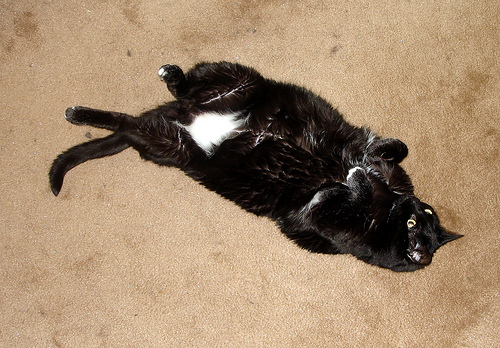
Opposite of dog communication, cats often wag their tails when they are getting overstimulated from petting. Also, they will look at your hand as if to say, " Uh...you keep at this and I'm going to let you know when to stop... with my teeth". They will spin around and direct their heads back into your hand, a sly way of telling you where they prefer the attention or they might just simply walk away from the action all together. Remember, just because kitty is showing you the belly, doesn't necessarily mean it's an invitation for petting. Most likely, it's a trap!


bellyrub


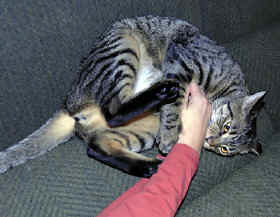
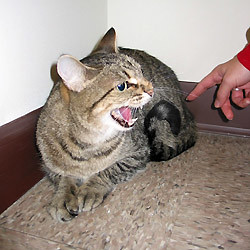
In extreme cases, cats flatten their ears, roll the skin on their backs, dilate their pupils, kick your hand with their hind legs, growl, hiss and swat. If you've gotten to the point where you cat is showing this level of aggression, your going to need to be more aware of the limits they are trying to convey to you.


cat_Attack


So what can you do to prevent an over-stimulus reality check? Be able to see it coming. Know that if your cat has bitten or swatted before that they are likely to do it again. Give breaks when your cat is getting antsy. Come back later and pet in small doses. Try re-directing the aggression to an appropriate toy instead. Never pet a cat that has bitten from over-petting while you are tending to something else. For instance, if your cat is sitting on your lap while you pet and watch TV. Chances are you won't see the bite coming!


FelineAggression


The most common behavior mistake that people make is to "hand wrestle" with a cat that gets nippy. Some people think its cute or spunky, but what they are really doing is training a cat to think it's acceptable to bite harder and harder each time. Keep play and petting separate!


Cats that overstimulate are more likely to be playfully aggressive, mistaking your hands for toys. So... one more time...if your cat is biting at your hands in a playful way, withdraw the reward (your hand), maybe give a verbal correction like, "NO!" and re-direct the focus to a toy. Switch the routine to an option with more value for play than your fingers.


Low activity and boredom are likely to contribute to your cat's biting behavior more than anything else. You have to create an environment in your home that is stimulating and fun. Otherwise, it's going to be you that your cat uses as a toy. A few simple additions to your home environment can make any cat feel more at ease and a lot less likely to choose biting over play time, or even just looking out a window at the birds outside. Remember, although cat's do just fine living inside our homes, they were not intended to be couch potatoes. They need to exercise, climb, play, hunt and just be cats.