Showing posts sorted by relevance for query lose hair. Sort by date Show all posts

Monday, April 20, 2009

Don't Lose Any Hair Over It!

By Daniel Quagliozzi
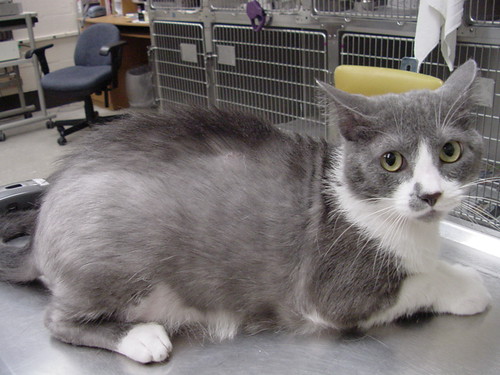


Feline_self-inflicted_alopecia


Personal hygiene is very important to our feline friends. Some cats will spend hours licking themselves clean so they look just right for you when you get home. You'd be just as concerned about your appearance if you had to sit in a sand box and do your dirty work! There's no way that you're going to exit that situation unscathed.


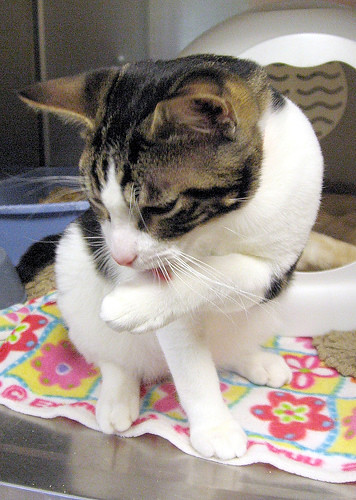
With cleanliness being high on the priority list, cats can launch themselves into an obsessive chain of over-grooming when times of stress take over the day's normal and predictable routine. A sudden move, new addition to the home like another cat, infant, dog or even furniture can upset a cat so much that they lick themselves bald from the intrusion. Why is this?
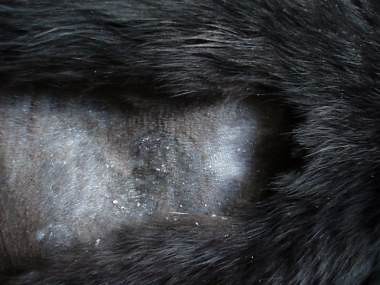


overgrooming2


It is thought that feline "Psychogenic Alopecia" may be a displacement activity resulting from anxiety or frustration, which in time might become compulsive. Nervousness, lack of stimulation and the desire for human contact can result in excessive grooming as well. Changes in the owner’s schedule and inappropriate punishment will only add to the anxiety!


So what can you about this? First you will need to rule out any underlying medical cause that may be prompting them to lick themselves. Itching, burning or skin disorders caused from flea bites, food allergies or household cleansers may be a factor. If the skin feels icky, your cat will lick the area clean to alleviate the discomfort.


Next, be observant of how long your cat is grooming and when it seems to be most prevalent. If there is no skin irritation noted and your cat seems to be stressed out or anxious, you may have an over-groomer on your hands.


cartclean


There are a number of approaches to this kind of problem, both medical and behavioral. We always recommend that you consult a veterinarian before you try any behavior modification on your own.
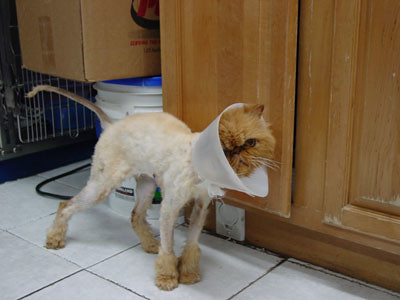

BennyCabinet


Sometimes, an Elizabethan or E collar can be helpful to stop a cat from being able to lick areas while you treat them with medications to stop the itching or in extreme cases, to calm you cat down. Common medications, such as Prozac & Buspar have been very effective in eliminating the anxiety which may be the root of the cause.


cat_grey_cleaning2


Increase the attention that you give your cat each day! You would be surprised how valuable a few moments of love can be. A little goes a long way in the average day of cats life. Afterall, you are their whole world.

Happy distractions are the key to stealing the focus away from the over-grooming. Play with your cat!!! Activity and enrichment are essential to your cats quality of life. Boredom can lead to obsession. Get your cat focused on fun and you will be surprised how quickly they will forget to keep on licking the same spot!
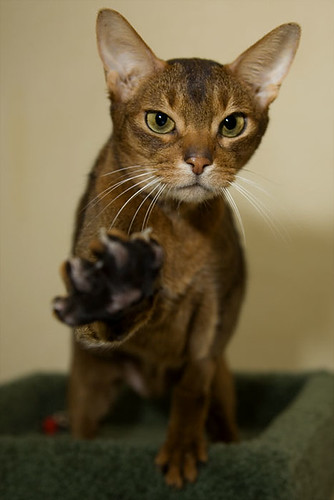


Oscar


Don't change your routine. Predictability is the one thing can make a cat worry less. No worries equal no anxiety. Keep the furniture moving, strange visitors and partying to a minimum. Your cat will thank you by licking you instead of licking themselves bald!



Friday, May 22, 2009

Velcro Kitties: Pointers for 9 to 5 guardians and their over-attached cats

By Daniel Quagliozzi


1569238224_5fe6892559


For those of us lucky enough to be working these days, a nine to five gig is a blessing, but for our housebound feline room mates, this time of the day can be downright traumatic. The consequence of forming a tight and routine bond with our animals can often be displayed as anxiety when we leave the inner sanctum and decide to leave for the day.


Cats are solitary by nature. They can get along just fine without the company of another cat, although there are many exceptions to the rule. While maintaining a life of independence, they tend to bond strongly with their human caretakers, even when they are paired off. After all, we are EVERYTHING to them! Humans are the providers of love, conversation, physical comfort, food, water and interactive play. Another cat simply can not provide this.


How do you know if your cat is stuck to you like Velcro? My guess is.... you won't even have to ask this question!


Signs Of Feline Separation Anxiety


  • Over-attachment to the owner such as following the person to every room of the house (heal chasing).

staring


  • Distress as the owner prepares to depart: This can take many forms, but some of the more common reactions are meowing, sulking, apparent depression, slinking away and hiding. (No, seriously it's true!)

    cat-kitten-cute-picture-photo-meow-closeup


  • Vocalization (crying, yowling, meowing) right after the owner has left or even when you are sleeping.


  • Anorexia – the affected cat is often too anxious to eat when left alone.


  • Inappropriate elimination – often in the form of urine marking. Deposits of urine or feces are often near to the door from which the owner has departed or are on that person’s clothing, bed sheets, or places like bath mats, rugs and behind or under furniture.


  • overgrooming2


  • Excessive self-grooming. This starts as a displacement behavior but can progress to compulsive self-grooming if unchecked. See: Don't Lose Any Hair Over It

    Kitty%20Scratches%20Door


  • Destructive behavior – rare, but some cats may claw and scratch door edges presumably in an attempt to escape their solitude. This can also happen while you are sleeping to get you to wake up and give them attention.


  • Exuberant greeting behavior – as if greeting you after you left on a long vacation. ( Where have you been ?!?!?!)

Here come the solutions!


Enriching the cat’s "home alone" environment is the key to success! This can be achieved by means of:


CB040437


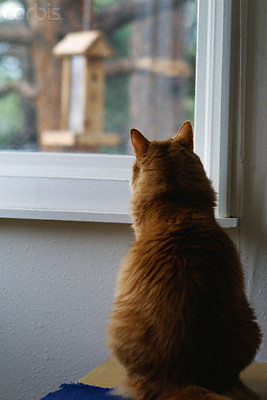
Giving the cat a view of the outside world! Add climbing structures, cat trees, open windows with screens.

Strategically position bird feeders near the windows with a view.


jj_relaymousechase


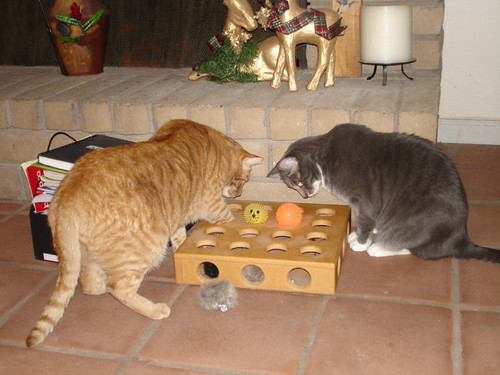
Leave toys all over the house and change it up every now and again. The same defeated mouse that your cat played with two days ago is no longer a challenge. Hide toys in creative places like the peek-a-boo box above.

Putting the day’s ration of dry food in a puzzle toy will keep your cat focused on eating instead of your absence. Although cats with separation anxiety tend not to eat when left alone, hunger is a great motivator when other sources (YOU) are no longer available. Some caveats apply if cats refuse to eat for more than a day or so. Consult your local vet if this turns out to be the case and try to work out some kind of compromise. It can get tricky.

Leave the radio on. The "white noise" effect of the radio drowns out the otherwise perturbing sound of silence. We find that classical music has positive effects on loneliness.

If behavior modification by independence training and environmental enrichment do not work it may be necessary to resort to anti-anxiety medication for the cat for a while. Consult with a veterinarian about the use of drugs like Prozac to help calm an anxious kitty.


Ok, Now go to work and rest assured that kitty is not making long distance calls, ordering pizza or rearranging your apartment while you are away.