Tuesday, August 11, 2009

In or Out? How to make up your mind

When people think of the ultimate living situation for a cat, several ideal scenarios may come to mind. Some may think that keeping their cat(s) indoors is safer, while others do not want to take away the quality of life that an outside animal has, justifying their cats need to go outside as more natural or instinctual. Does an indoor cat miss anything by never going out? Does an outside cat have a better life because it can choose it's own territory and lay in the grass?

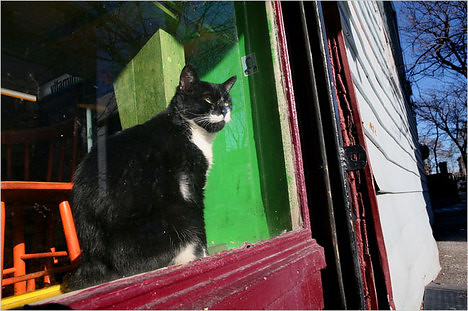
CatOreoBroolynDeli-thumb-468x311

A major risk for outdoor cats, and one we hear about all too often, is being hit by a car. Cats can also get stuck in many compromising situations, under houses or crawl spaces where they can become dehydrated or starve. Encounters with other cats can expose your cat to diseases, some of which cannot be vaccinated against, like FIV & FELV. Finally, there are people who simply do not want cats in their yard. These disgruntled neighbors may trap your outdoor cat and take him or her to the animal control center or far far worse punishments. Yikes, I shudder to think about it sometimes.


Fortunately, there are many ways to help your feline friend to have a happy, fulfilled life indoors or to allow your cat a safe outdoor experience.

Making The Outdoors Safe

If your backyard has a fence around it, consider installing a Cat Fence .This netting system prevents your cat from leaving the yard, so you know where he or she is at all times. It can also be used to keep other cats out of your yard.

Build an enclosure outside. This allows the cat to have an outdoor experience while remaining safe. Check cat magazines for ideas and plans.
catharnessoutside
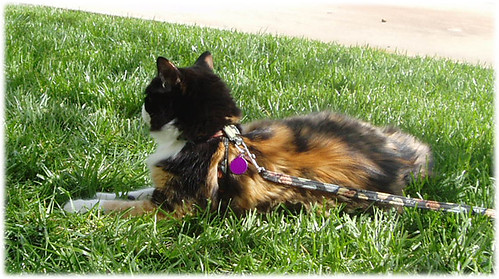
If you have a younger cat, train him or her to accept a leash and harness. This way, you can take the cat on monitored outdoor excursions. While a few brave cats may enjoy walks around the neighborhood, the majority will prefer sticking close to home—the front or back yard.


staring


Transitioning A Cat To Indoors Only

This isn't going to happen overnight folks. Hang in there and make some adjustments to your home and maybe even to your lifestyle. You will have to make Small compromises to make your cat happy
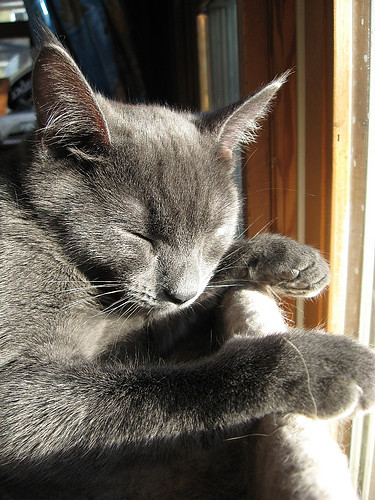
catsun

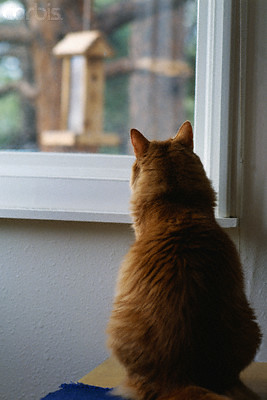
Put screens on your windows and get a kitty window seat.

Play with your cat more. Get him running around, chasing a string or other toy several times a day. A little catnip makes it even more fun!
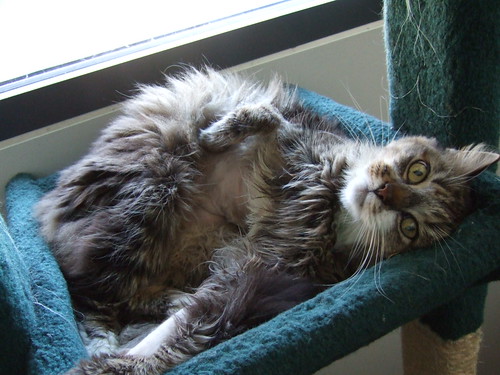
DSCF3300
Add vertical space to the cat’s territory. Cat trees, cat condos, shelves, and other climbing apparatus give your cat more places to climb, play, and call her own.


Provide scratching posts. Try posts made of different materials—corrugated cardboard, wood, carpet, or sisal rope. You can get freestanding scratching posts, floor level, or door hanging varieties.
51399878_IMG_0616VideoCatnip2
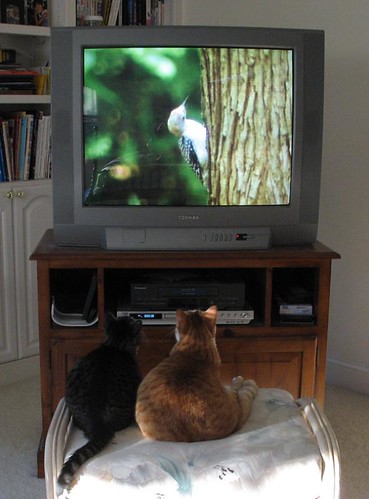
Play videos. Many cats enjoy watching videos of cats, birds, fish, insects and nature scenes. Check your local pet supply and video stores.

catkittygrass[1]
Grow kitty grass. Available at many pet supply stores, it is safe and tasty for your cat to nibble.

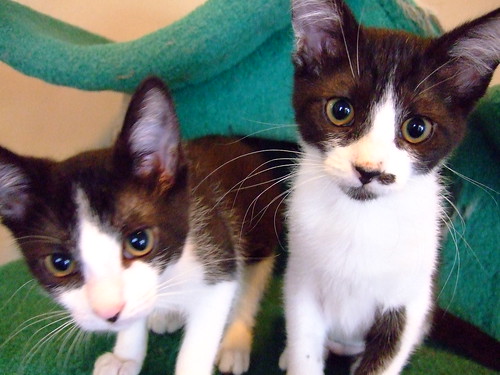
If your cat is an “only child”, consider adopting another to keep him company. That would make The SF/SPCA, You and your cat very happy!
2009_06300031

Remember: even indoor cats should always wear an elastic or breakaway collar and an identification tag. In an earthquake, fire, burglary, or other mishap, a cat can easily become lost outside, and identification is her best bet for getting home.

Friday, August 7, 2009

Why Is It Cuter To Spay & Neuter?

DSCF3821


Overpopulation of cats is a huge concern, not just in the Bay Area but in shelters across the country. Quite simply, the more animals sterilized by spay & neuter surgery, the less homeless cats and dogs will wind up in shelters, live in feral colonies or create an epidemic of strays that carry diseases. In extreme cases cats are often euthanized for space, time and undersocialization which makes them un-adoptable or extremely hard to place in compatible living situations.

So, why should YOU spay & neuter????

• Spay/neuter surgery has health and behavior benefits. It removes reproductive organs that often cause cats to have medical problems in later life.

• Spaying reduces the risk that a female cat will suffer from mammary tumors and uterine cancer. It eliminates the risk of complications from pregnancy.

• Neutered males won’t develop prostate problems or testicular cancer.

• Altered cats are more relaxed pets, because they are not driven to mate, and they are less inclined to defend territory and spray. They are less apt to fight with other animals. They are not as likely to roam, so there’s less chance they will get lost, injured or killed.

• Neutered cats are less apt to urinate or spray in the house.

• Altered cats have fewer behavior issues.

• Contrary to popular belief, altering does not spoil your pet’s personality. Nor does it make your pet fat and lazy.

• Spay/neuter surgery also has humane benefits. It saves lives by preventing unwanted litters and homeless animals.

It's a myth that cats should have one litter before spaying:

• Motherhood does not make for a better pet; having a litter doesn’t necessarily result in a calmer cat.

• There are advantages to altering at an early age.

• Early spay/neuter surgery ensures that a cat won’t reproduce.

• Animals altered at an early age seem to recover more quickly and painlessly that those altered later on.

• There is less surgical trauma, faster recovery and fewer complications with early spay/ neuter surgery.


Still wondering why its cuter to Spay & Neuter? I didn't think so! Contact the San Francisco SPCA Spay & Neuter Program.


2009_06300035


To make an appointment, call 415.554.3030
Leanne B. Roberts Animal Care Center201 Alabama StreetSan Francisco, CA 94103
Open Monday - Friday, 8 a.m. - 6 p.m. (except holidays)
Free client parking available in The SF/SPCA lot at Alabama & Treat streets.

Monday, August 3, 2009

OUTREACH: Adoptions Unsung Heroes

By Daniel Quagliozzi

The Outreach Adoption Program is very close to my heart as I spent three years of my early career with the San Francisco SPCA doing events all over the city & county, even across the bay. Outreach is a vital piece of the SF/SPCA mission. It takes adoptable animals out of the confines of the shelter and brings them to neighborhoods, street corners, office buildings, street fairs, adopt-a-thons, pet supply stores and practically to your living room if they could get permission to wheel the cages in.


kittypoinsettia500

The biggest and most noteable event is our annual Macy's Holiday Windows, which utilizes the beautiful window displays of Macy's Union Square and spotlights adoptable cats & dogs. Each year we break records, finding homes for over 300 animals.


SFSPCA-8


The SF/SPCA and Macy's holiday windows are a popular, annual tradition in San Francisco, showcasing adoptable animals in displays that take into account every element of design and comfort, from temperature controls to climbing and hiding spots for the featured dogs and cats.


SFSPCA-17

The philosophy of Outreach has always been to educate the public about animal welfare while still providing the very important service of finding cats, kittens, dogs and puppies loving homes. It's not hard to win over the public when you are armed with kittens. We almost always have you at "Hello"! Who can resist?


Outreach SFSPCA


Putting together an Outreach event is no easy task. Suitable animals have to be behavior tested and selected for the drive. A foldable tent, cages and table set up have to be loaded into the van each day and set up under the backdrop of downtown San Francisco and it's heavy foot traffic. Weather, noise level and safety are always a big concern, but the staff and dedicated volunteers are seasoned and ready for just about anything. I remember one time on Castro Street, a gust of wind nearly tore down our entire site, sending our tent, literature and chairs flying. Luckily the kittens in the cages were not harmed as they were anchored down really well.

The people who happened to be just walking by really stepped up and helped us put humpty dumpty back together again. That moment really stands out for me. The support I felt for our organization and our animals was overwhelming. Outreach truly bridges the gap between the SF/SPCA and the community that supports us, even in hard times.

If you want to see what all the excitement is about and attend one of our Outreach events in San Francisco, drop by the following locations:


August
Saturday, August 1 – Justin Herman Plaza, 9am – 1pm
Sunday, August 2 – Catnip and Bones, 11am – 2:30pm
Tuesday, August 4 – Embarcadero 4, 11am – 2:30pm
Wednesday, August 5 – Embarcadero 4, 11am – 2:30pm
Thursday, August 6 – Levi Plaza, 11am – 2:30pm
Friday, August 7 – 50 Fremont, 11am – 2pm
Tuesday, August 11 – Embarcadero 4, 11am – 2:30pm
Wednesday, August 12 – Embarcadero 4, 11am – 2:30pm
Thursday, August 13 – Levi Plaza, 11am – 2:30pm
Saturday, August 15 – Justin Herman Plaza, 9am – 1pm
Sunday, August 16 – Catnip and Bones, 11am – 2:30pm
Tuesday, August 18 – Embarcadero 4, 11am – 2:30pm
Wednesday, August 19 – Embarcadero 4, 11am – 2:30pm
Friday, August 21 – 50 Fremont, 11am – 2pm
Saturday, August 22 – Justin Herman Plaza, 9am – 1pm
Sunday, August 23 – Catnip and Bones, 11am – 2:30pm
Tuesday, August 25 – Embarcadero 4, 11am – 2:30pm
Wednesday, August 26 – Embarcadero 4, 11am – 2:30pm
Thursday, August 27 – Levi Plaza, 11am – 2:30pm
Friday, August 28 – Palace Hotel Event, 11:00am – 3:00pm

*Schedule subject to change*

Mobile Outreach location details:

50 Fremont - in the Food Court Plaza

Catnip & Bones -2220 Chestnut Street at Pierce Street
Embarcadero 4
Drumm Street at Sacramento
Justin Herman Plaza
Foot of Market Street
Levi Plaza - Battery Street at Filbert Street

For more information, email us at outreach@sfspca.org.
Learn how you can sign up to help with Mobile Adoption Outreach!

Friday, July 31, 2009

Video Extravaganza!!!!!

SF/SPCA Voted BEST San Francisco NON PROFIT in The Bay Guardian!
We would like to thank everyone who took the time to place a vote for our organization. We will continue to set the pace in Animal Welfare, not only in San Francisco but across the United States.
Ask out Thomas for a dinner date. He's already dressed for the occasion!

Ariana has been waiting too long for her perfect play partner.
Take a chance on two long term cats that need the simple things in life just like YOU!

Monday, July 27, 2009

Ahoy Matey! Cats on Boats?

By Daniel Quagliozzi


This weekend I went sailing on the San Francisco bay with some friends. We set sail from the docks of Sausalito and braved some choppy waters, taking on the powerful bay waves. I truly felt small among the vastness of the bay and somewhat helpless against the tides. Thankfully we had an awesome and capable captain.
While we cruised the bay, I couldn't help but think about the people living in the boats scattered around the shores and docked at the port of Sausalito. There were quite a few boats that were being lived in. Maybe it's a sign of the times? Possibly the economy? Talk about cramped quarters! It's got to be interesting to live that lifestyle, but I couldn't imagine living anywhere without a cat. Who says you can't have a cat, just because you live on a boat?


Vernazzacat_full


And then...I saw him, a nimble black and white cat scaling the deck of one of the boats docked in the harbor. He seemed well adjusted and content, just like any cat you might see sitting in the window of someone's house. He knew his boundaries and stayed within the lines. Yet still, I wondered what it must be like when the boat set sail. All the rocking and shuffling about was enough to make me a little queezy. What must it be like for a cat? For centuries, cats stowed away on ships and made their way across the oceans, landing in foreign places. Cats adapt, plain and simple.


BoatNewOrleansMarinaMitch


Coincidentally, we received an email about cats on boats this week:


We adopted our adorable cat from the SF SPCA. We have special circumstance in that we live on board a boat. I have heard that in order to train a cat to stay on board you should toss them into the water the first time they try to get off the boat. I do not agree with this and certainly don't have the courage to terrify our beautiful new baby in this cruel way. My question to you is; how do we train her to stay on the boat and not get off onto the dock? She is an indoor cat, but we would like to allow her the freedom of the decks and flying bridge, if possible.


autumn_boat_balancing


Dear Adopter,


I would agree that tossing your cat in to the water would be the wrong thing to do. That would only serve to heighten anxiety towards you and the environment in general. I would fit her for a harness and get a nice long leash. They sell thin, lightweight leashes in various lengths. This way she can explore and be safe at the same time. Of course she will most likely lay flat on the ground when you first put it on, that's normal.


Rather than thinking of her like a dog on a leash, think of the leash as just a life line. Keep it slack and don't pull her. Coax her over to you with food or toys. All cats respond differently with a harness but give it some time and keep it positive. Other than to create a barrier of some kind, there's no real way to keep a cat from roaming onto a dock. They don't respond the same as dogs and don't have the same group social needs. Cats explore.


Management is your best option.

Tuesday, July 21, 2009

Tessa's Time To Shine

By Daniel Quagliozzi


2009_07220022

New cats enter the shelter everyday and everyone of them has a story to tell. Every now and again, a unique case like Tessa captures the interest of the Cat Behavior Team, both as a challenge and as a margin to judge success.


In March of 2003, Tessa arrived at our shelter as a four year old, former feral (say that three times fast), with very high anxiety and increased levels of fear. She was a difficult cat to place as she stayed hidden most of the time and would hiss and growl at volunteers if they approached without caution. In time, Tessa found a match! She would soon be living with the person that she thought would take care of her for the rest of her life.


Fast forward six years to the day Tessa originally arrived here. A very distraught client calls the shelter asking for assistance. Without warning, her life plans have changed and she will have to move to Hawaii. Unfortunately for Tessa, she will not be accompanying her guardian to enjoy the sun and fun as she was unable to make arrangements in time for her to go. Instead, Tessa will be coming back to the SF/SPCA for re-homing. There is just one catch. Tessa refuses to go into a cat carrier without a fight.


2009_07220016

In extreme cases like this, The Cat Behavior Team will make house calls. We want to make this hard transition as smooth and stress-free as we can. Poor Tessa will need all the breaks she can get. So, with our heavy gloves, cat carriers and bravery, we headed to the studio apartment that Tessa had been living in for six years. She could hear us coming and immediately hid under the bed and inside the mattress, despite the wall of pillows constructed by her former guardian to hinder an escape. We lifted the mattress and carefully extracted Tessa from inside of the box spring. She went in the carrier with little effort and after a tearful goodbye from the person who cared for her... off we went to make her comfortable back at the SF/SPCA.

DSCF3744

Tessa was not a happy camper. Despite our efforts to give her multiple hiding places, a quiet and sunny room with no other cats or noises to scare her, she still hid most of the time and would hiss and growl at anyone who entered her kennel. Remarkably, she would start to tone it down after a while, making personal connections with soft spoken volunteers and staff who would spend quiet time , singing her songs and reading in her presence. The success rate of working with shy cats has to be measured in baby steps.


Then, it got more complicated. Tessa would find comfort with those who spent the quality time with her but not with the animal attendants who came by for short visits to drop off food, empty a litterbox or check on her welfare. She graduated from hissing and growling to swatting and attacking.


There are common stimuli that can drastically cause anxiety in a cats behavior:


  • Arrival of a stranger


  • Intrusion into their personal space


  • Sudden movements


  • Loud noises


  • Novel objects


  • Novel smells


  • Loss of control over the environment

  • The arrival of other cats

This was definitely the case with Tessa. Her harsh reaction to virtually all of these stimuli (except for other cats)made the case very clear. Tessa was indeed having a very hard time adjusting to the drastic changes in her life's routine. So what do you do in cases like this?

Initially, we tried to desensitise her to the strangers, having them spend more and more time with her , especially during feedings. With her hesistance to people coming and going becoming an issue, the visitors who stayed longest seemed to be her favorite. Tessa showed us her discomfort by rolling around on the floor, showing her belly and purring like a motor. Progress!!!!
The next step was to move Tessa into an environment with consistancy. We wanted to immerse her in a room where people would stay longer than just few minutes to half an hour and be able to work with her socialization on a continuous basis, making every meal count. The next obvious place to live would be our office!


2009_07220020

We moved Tessa in last week and so far things are really looking up! She walks freely around the room and has adjusted really well to the comforts of our office. Like a true diva kitty, Tessa has us wrapped around her fingers, catering to her every whim. It's a welcome distraction to our daily tasks and so worth the reward. Tessa is well on her way to being the shy but loving house cat that she once was.


If you are interested in keeping up with Tessa's progress or would like to take her home to live with you, feel free to email The Cat Behavior Program at catbehavior@sfspca.org

Monday, July 20, 2009

Senior Moments: Caring for your elderly cat

By Daniel Quagliozzi

2007_04010077


After yet another visit to the veterinarian with my 18 year old cat; Matilda, I decided it may be a good time to address what it's like to care for a senior cat. You may remember Matilda from previous posts such as : My Alarm Clock Is Hungry & My Cat Made Me Do It. This time around, the exam shows the onset of kidney disease. As it is, I give Matilda subcutaneous fluids a few times a week to keep her well hydrated and functioning as normal as possible. Although, Matilda habitually defies normalcy, as you can see in her other stories. Her failing health, coupled with cognitive dysfunction (Catzheimers) make caring for her a lesson in life's mysteries.

Sure, there are challenges, disappointments, reality checks and unknown territory behind every corner, but I have news for you.... Some day, your cat will grow old too and it will suddenly occur to you that kitty is not the sharp, nimble footed acrobat s/he once was. Caring for elderly cats is not as bad as some make it out to be. It's just life's reminder that nothing lasts forever. Why not help your cat along the way with dignity and grace?


When is a cat considered a senior?

Cats often initially show age related physical changes between the ages of seven and ten years. Most human companions will notice differences, both physically and behaviorally in their cat, by the time the kitty is twelve. In my case, I started to see signs of aging in Matilda around fifteen. It's been a long three years since then!

You may notice some of these common signs of aging in your cat:

Many cats will have some difficulty jumping or climbing onto higher surfaces due to arthritis.

  • Your cat may be less diligent about grooming himself. (Their hair can appear matted or greasy)
  • Changes (in environment or routine) may be more difficult to adjust to.
  • Increased vocalization, or meowing is louder than usual.
  • Your cat may sleep more (ok, more than usual).
  • Decrease in energy and zest for play.
  • Change in appetite or refusal to eat.
  • Litter box avoidance or aversion.
  • An increase in aggression due to pain or confusion.
  • Some cats become more relaxed and mellow, and may be more accepting of petting or medicating.

Ways to Accommodate an Older Cat’s Special Needs

ramp-cat


For cats with arthritis or joint pains, ramps or stairs covered with carpeting are helpful to make access to sofas, beds, or other favorite resting places easier. There are also elevated food and water dishes available if your kitty has trouble with neck pain.

50217151


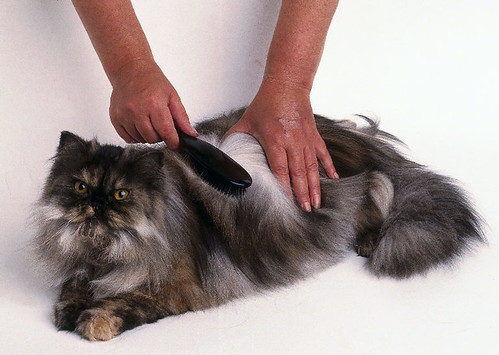
If your kitty is not grooming well, you will need to help out. Matted coats, particularly on long-haired cats are unhealthy and uncomfortable. Regular grooming is good for their fur and for skin-circulation, and many cats enjoy being brushed. Try a few different style brushes to see which your cat prefers.


Hear no evil, See no evil, Taste no evil


As hearing and sight become less acute, you may notice you cat lumbering around the house or even hiding as a result. Adding night lights or providing extra light in general is a thoughtful accommodation. If blindness appears suddenly, then it will be more obvious with the cat noticeably bumping into furniture or walls. Restricting territory or padding sharp corners of low furniture will prevent injury. In the case of hearing loss, a lack of response to sounds, coming when called (most cats ignore you anyway), or an increased vocalization or disorientation may also be apparent.

Some cats will become picky about food. This is best discussed with a veterinarian as it can indicate a tooth/gum condition or other health problem. However, some elderly pets may just need to be tempted to eat. It can help to feed smaller, more frequent meals. They may be more responsive to fresh food, or food that has been gently heated, as they can often smell it better. Older cats need to drink plenty of water, and it may be necessary to try several different water sources to insure they are drinking.


Routine is the key!

50050226_6e842c148b

Adjusting to sudden change is difficult for most cats, but more so for older kitties. Make any changes in the environment or routine gradually. Something as simple as a variation in daily schedules can be an upset. Trying to keep as much routine as possible for your cat will be very helpful in reducing stress. This means keeping cat bedding and furniture in its usual place, and having regular times for feeding, cuddling, grooming and other interactions each day.

CB040437


Gentle exercise is a great stress reducer and can maintain health. This gives them a chance for mental stimulation without a lot of physical activity. Having a spot in a sunny window to observe outdoor wildlife might be fun, too.

Preventative and Basic Care

Your senior pet should have a full examination by a veterinarian every six months, even if she seems perfectly healthy. If medical problems are diagnosed and treated early on, the treatment may be more effective and less costly. Some degenerative processes can be slowed down when detected early. These regular check-ups are the time for you to discuss with your vet any changes in behavior, appetite or sleeping habits.

We love them when they are kittens, but when they grow old they need us most. Shelters across the country have many senior cats that are looking for compassionate humans to watch over them in their golden years. Please check out amazing cats like MONKEY!

2009_06300086

MONKEY 16 yr old with plenty of pep!