Showing posts with label swat. Show all posts

Tuesday, July 21, 2009

Tessa's Time To Shine

By Daniel Quagliozzi


2009_07220022

New cats enter the shelter everyday and everyone of them has a story to tell. Every now and again, a unique case like Tessa captures the interest of the Cat Behavior Team, both as a challenge and as a margin to judge success.


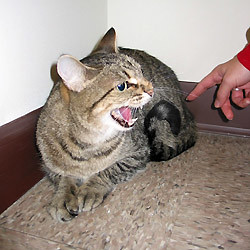
In March of 2003, Tessa arrived at our shelter as a four year old, former feral (say that three times fast), with very high anxiety and increased levels of fear. She was a difficult cat to place as she stayed hidden most of the time and would hiss and growl at volunteers if they approached without caution. In time, Tessa found a match! She would soon be living with the person that she thought would take care of her for the rest of her life.


Fast forward six years to the day Tessa originally arrived here. A very distraught client calls the shelter asking for assistance. Without warning, her life plans have changed and she will have to move to Hawaii. Unfortunately for Tessa, she will not be accompanying her guardian to enjoy the sun and fun as she was unable to make arrangements in time for her to go. Instead, Tessa will be coming back to the SF/SPCA for re-homing. There is just one catch. Tessa refuses to go into a cat carrier without a fight.


2009_07220016

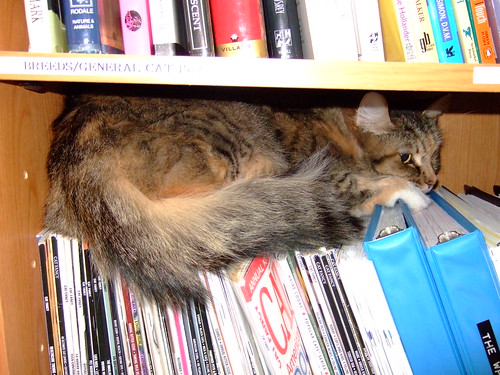
In extreme cases like this, The Cat Behavior Team will make house calls. We want to make this hard transition as smooth and stress-free as we can. Poor Tessa will need all the breaks she can get. So, with our heavy gloves, cat carriers and bravery, we headed to the studio apartment that Tessa had been living in for six years. She could hear us coming and immediately hid under the bed and inside the mattress, despite the wall of pillows constructed by her former guardian to hinder an escape. We lifted the mattress and carefully extracted Tessa from inside of the box spring. She went in the carrier with little effort and after a tearful goodbye from the person who cared for her... off we went to make her comfortable back at the SF/SPCA.
DSCF3744

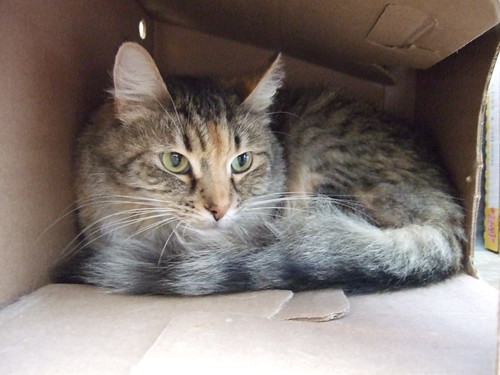
Tessa was not a happy camper. Despite our efforts to give her multiple hiding places, a quiet and sunny room with no other cats or noises to scare her, she still hid most of the time and would hiss and growl at anyone who entered her kennel. Remarkably, she would start to tone it down after a while, making personal connections with soft spoken volunteers and staff who would spend quiet time , singing her songs and reading in her presence. The success rate of working with shy cats has to be measured in baby steps.


Then, it got more complicated. Tessa would find comfort with those who spent the quality time with her but not with the animal attendants who came by for short visits to drop off food, empty a litterbox or check on her welfare. She graduated from hissing and growling to swatting and attacking.


There are common stimuli that can drastically cause anxiety in a cats behavior:


  • Arrival of a stranger


  • Intrusion into their personal space


  • Sudden movements


  • Loud noises


  • Novel objects


  • Novel smells


  • Loss of control over the environment

  • The arrival of other cats

This was definitely the case with Tessa. Her harsh reaction to virtually all of these stimuli (except for other cats)made the case very clear. Tessa was indeed having a very hard time adjusting to the drastic changes in her life's routine. So what do you do in cases like this?

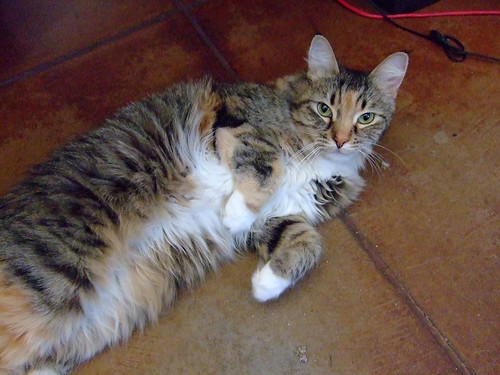
Initially, we tried to desensitise her to the strangers, having them spend more and more time with her , especially during feedings. With her hesistance to people coming and going becoming an issue, the visitors who stayed longest seemed to be her favorite. Tessa showed us her discomfort by rolling around on the floor, showing her belly and purring like a motor. Progress!!!!
The next step was to move Tessa into an environment with consistancy. We wanted to immerse her in a room where people would stay longer than just few minutes to half an hour and be able to work with her socialization on a continuous basis, making every meal count. The next obvious place to live would be our office!


2009_07220020

We moved Tessa in last week and so far things are really looking up! She walks freely around the room and has adjusted really well to the comforts of our office. Like a true diva kitty, Tessa has us wrapped around her fingers, catering to her every whim. It's a welcome distraction to our daily tasks and so worth the reward. Tessa is well on her way to being the shy but loving house cat that she once was.


If you are interested in keeping up with Tessa's progress or would like to take her home to live with you, feel free to email The Cat Behavior Program at catbehavior@sfspca.org

Monday, May 11, 2009

When Cat Meets Dog....The road ahead can be rocky

By Daniel Quagliozzi


Ninja-Cat


In all my years of working with cats in a shelter environment, perhaps the most popular question asked is; "Can you help me find a cat that will get along with my dog?" As simple as this question may appear to be, it's a huge math equation that requires a predictive approach to finding the answer. It involves guess work, prior knowledge about the independence and gregariousness of the cat and also some background on the resident dog. To put it frankly, it's very hard to answer without thumbing through an entire list of animals and trying to imagine them adapting.


So, to make things simpler for all of you to make these decisions on your own, I have compiled some tips to help you out with the search for the ultimate dog-friendly-feline.


Smoothing Out the Rocky Road Ahead:


The best predictor of how cats and dogs will get along together is their background. Have you walked past a cat with your dog? Did it growl, bark or lunge, or did it just get curious or not care? Audition your dog on leash with a willing cat that already has dog experience – they are less likely to run away and pee on your brand new Ikea sofa. It’s also good to try out the same cat on more than one occasion and to try out more than one cat. The trick will be finding this brave and un-frazzled feline. Some cats, or shall I say most cats ...will want nothing to do with this experiment.


2743131580_f22d7cdb01


Read up on the cats past history. If you are adopting from a shelter, ask the adoption staff to dig up any information on the cats prior experiences. This will be essential in trying to imagine how it will be effected by a dogs approach, play and general cohabitation.


Be aware that certain dog breeds are hard wired to chase small prey. A feisty terrier that digs holes in your yard and brings home dead critters may not be a good companion for a 2 month old kitten. Predatory types are much more stressful for cats and must be constantly managed when around the cat if they are to live with one. Predation is not something a dog can be easily trained not to do as it is deeply ingrained.


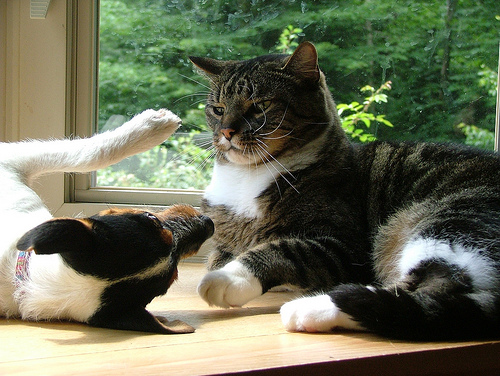
dog-cat-2


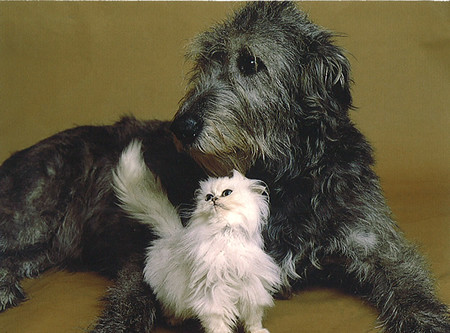
Cats who have not been socialized to dogs will almost always behave defensively, by fleeing and/or with an aggressive display the first time they encounter a new dog. If the dog does not come on too strong, and if the cat is given dog-free zones to retreatto, many cats will gradually get used to the dog and sometimes even become bonded.


Ok, So you did it. You combined a cat and a dog. What should you do to make your home more appealing to both?


extra-wide-walk-thru-gate-with-pet-door


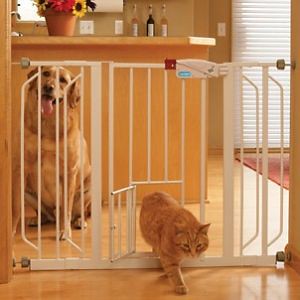
  • Have a “safety room” or rooms as well as high places the cat can access but the dog cannot. Baby-gates, cat doors and clearing high surfaces can accomplish this. It is important that the cat can retreat to regroup and relax away from the dog and then venture forward into “dog territory” at her own pace. The cat should have access to food, water and litter in this area so no interactions with the dog are forced.

catcarrier


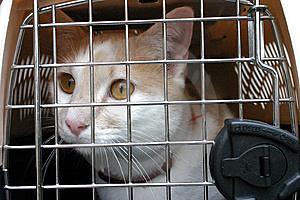
  • Never force the cat (or dog) into proximity by holding them, caging them or otherwise restricting them from escaping. This is defintely not going to help matters. Aside from it being inhumane, stress is a common reason for cats to break litter box training and nobody wants that!


  • For the first introduction, have the dog on leash in case he decides to chase. If it seems to be going well, take the leash off and supervise closely.


  • If the dog is behaving in a friendly and/or cautious way, try to not intervene in their interactions, except to praise and reward the dog for his good manners.

article-0-02A6A631000004B0-556_468x532


  • Interrupt any intense chasing and try to redirect the dog’s attention to another activity – this is very difficult so you may be forced in future to manage the dog on-leash around the cat until you have worked out a routine or divided up the house.


CatAttack2


  • In the first few weeks, observe the trend: are things getting better or worse? Monitor interactions until there is a pattern or plateau in their relationship.

13-dog%20and%20cat


  • If the dog is the newcomer, be sure to give plenty of extra attention to the cat so she does not associate this change with reduced attention and affection. If the newcomer is a cat, it’s also a good idea to make sure the dog associates the new intruder with good things for him. Shoot for positive associations always.


CaughtDogInLitterBoxNyx


  • Dogs should not have access to the cat litterbox – it is too stressful for the cat and the dog may eat cat feces and litter. Most dogs will also eat cat food the cat leaves behind – we suggest feeding cats in the cat’s “safe” room or on a high surface.

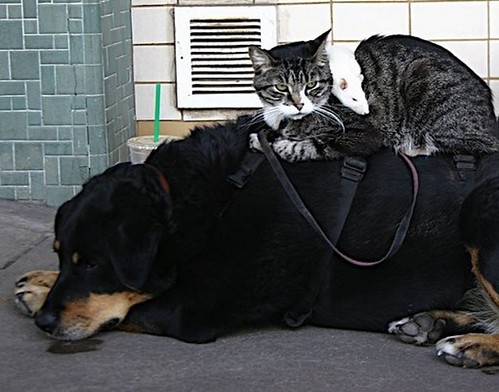
dog,%20cat,%20rat

If you are successful with getting the dog and cat to live in harmony, perhaps you want to try adding a rat for good measure?


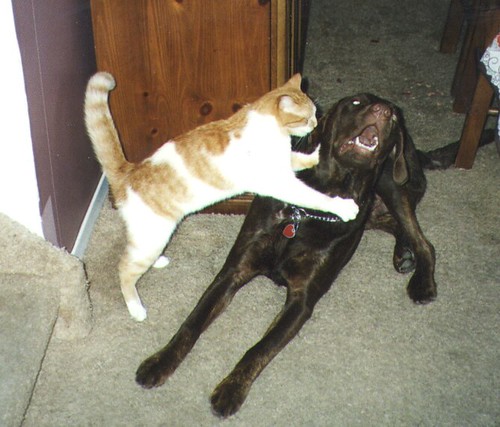
P.S. we purposely chose pictures for this blog where the cat had the upper hand over the dog. Sorry dog lovers, Litter Did You Know is all about the CATS!!!!!

Monday, April 27, 2009

From Fear to Friendship: Working with undersocialized kittens

By Jamey Walker


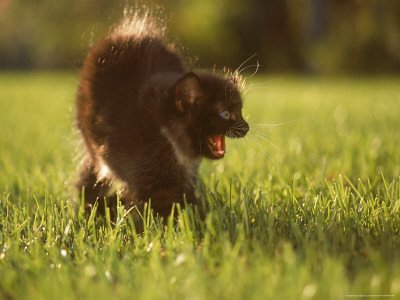
343465-FB~Eight-week-old-Kitten-Hissing-Posters


Every year at about this time the SF SPCA starts to take in under-socialized kittens to try and rehabilitate them. These kittens are the product of Mama cats that are either feral or have had their babies outside and received no human contact.


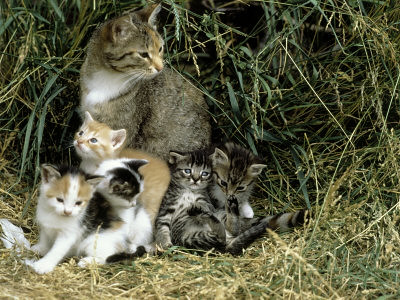
186573-FB~Cat-and-Kittens-in-Hay-Posters


These little guys have never been around people and as a result, panic when they are actually face to face with us giant human monsters! What if we suddenly we saw a 20-foot spider coming towards us?


alleycatallies_03


Well, when these little kittens arrive they are also understandably defensive and fearful. They may have had little or no contact with people. They will usually run like the dickens if you set them down in an open space. If cornered they may swat, hiss or spit-stomp (this is when a cat jumps on their front legs towards you, while giving a sharp, intense hiss). All of these behaviors are designed to create distance between the threat (big goofy humans) and themselves.


2960128360_5068aa6351


So when we take one of these little guys into our shelter, we want to be very sensitive to their fear. At the same time we have to handle them so they become accustomed to human contact. We accomplish this by using a lot of positive rewards along with gentle, repetitive handling. But don’t let their kitten cuteness fool you, socializing them can take a lot time and is often a difficult process.


Seeing one of these kittens start to become happy and comfortable around people is one of my favorite moments because it means they have a chance at becoming adopted and getting a home off the streets.


If you are interested in helping these little scrappers feel good around people, you can volunteer as a feral kitten socializer or a foster parent! Our volunteers go through specialized training to learn how to work with all types of under-socialized kittens and are the major force behind getting them ready for adoption.


For information, contact Volunteer Services at 415.522.3543 or email: Volunteer@sfspca.org. or Foster Care: 415-522-3542. or foster@sfspca.org

CAT BEHAVIOR MAIL BAG:

Dear SF/SPCA Cat Behavior Program,

I'm not sure if you remember but Dougie (now Chief due to his large feather like ears) was a very sick and under-socialized kitty. He came to you with ringworm and from all the paperwork I read it took months of medication and quarantine before he recovered. Once he did, understandably he was distrusting and skittish and not ready to be adopted. When we first saw him he looked sad and scared all alone in his room. My heart went out to him after I got his paperwork and read his story I just couldn't stop thinking about him. We visited him 4 times, hoping we'd be able to have a meeting with him but every time we found he wasn't ready yet. I tried to convince myself that this wasn't the write cat for us but I couldn't get him out of my mind.

We'll long story short- we adopted him right after he became available and have loved him ever since. It has taken a little time for him to adjust to us and his surrounding but it is safe to say he is a very happy cat and day after day more trusting, more loving and full of personality. We have another cat names Pippi and if there ever were two best friends, it's them.

We've since moved to Portland where we have a house and a large yard where Chief and Pippi patrol the perimeter and play in the grass. It's a lovely life.

feral1

While he was with you he had a little sheep skin bed he slept on. To this day he seems to only want to sleep on wool. If the sheep skins are being washed, he'll hunt out a sweater or the blanket on the bottom of the bed. If we lay our wool winter coats on the sofa the next day they'll have a little fur nest on them. He just can't help it. We also took his favorite toy with us when we adopted him- the pink tube on a stick. Somewhere along the way the stick fell off but he still loves the tube. So much so that he takes it to bed with him and cuddles with it.

feral2

All of this is because your dedicated staff showed him so much love, caring and attention. I can't tell you how impressed I am with your facility. Thank you so much for taking the time to care of this lovely animal. Where most places would have put him down because of his health or temperament, you stuck by him. I don't have names or faces to direct my gratitude so I'll send it to all your staff and volunteers. Our lives are richer because you care.

Thank you so much,

Jessica W.

Monday, April 6, 2009

Give Your Cat An Over-Stimulus Plan

By Daniel Quagliozzi


Just like people, cats are unique is so many ways, especially when it comes to petting and playing. Of all the activities a human can provide for a cat, they seem to love these two activities the most. Probably because it's near impossible for a cat to pet itself or wave a toy around. This my friends... is why we were put on this earth. Hands were made for petting cats, holding toys and opening cans of food! Well, from a cat's point of view anyway....


bite


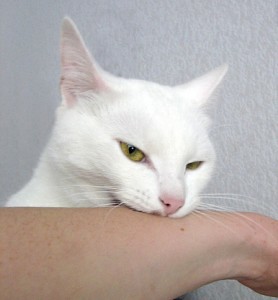
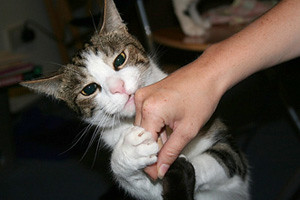
Your cat may think that your hands are only for petting and show no interest in an interactive toy. Or...perhaps your cat gets confused about your hands all together and decides to give you a bite whenever the opportunity knocks? The question is, when is it ok to pet and when should you stop?


Cats can get overstimulated from petting the same way humans can get annoyed from a bad back rub or too much physical interaction. Sometimes, you simply do not want to be touched or talked to for that matter. Ever get on a crowded bus after a long day at work and some stranger wants to tell you their life story? You want to get home and crawl into a ball.


bite2


Well, cats tell us their feelings in many ways, some obvious, others very subtle. Here are some clues:


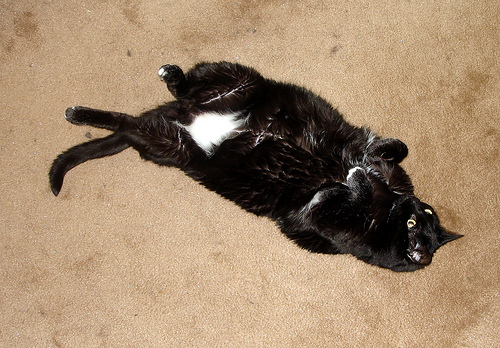
Opposite of dog communication, cats often wag their tails when they are getting overstimulated from petting. Also, they will look at your hand as if to say, " Uh...you keep at this and I'm going to let you know when to stop... with my teeth". They will spin around and direct their heads back into your hand, a sly way of telling you where they prefer the attention or they might just simply walk away from the action all together. Remember, just because kitty is showing you the belly, doesn't necessarily mean it's an invitation for petting. Most likely, it's a trap!


bellyrub


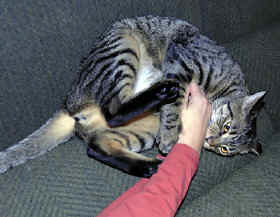
In extreme cases, cats flatten their ears, roll the skin on their backs, dilate their pupils, kick your hand with their hind legs, growl, hiss and swat. If you've gotten to the point where you cat is showing this level of aggression, your going to need to be more aware of the limits they are trying to convey to you.


cat_Attack


So what can you do to prevent an over-stimulus reality check? Be able to see it coming. Know that if your cat has bitten or swatted before that they are likely to do it again. Give breaks when your cat is getting antsy. Come back later and pet in small doses. Try re-directing the aggression to an appropriate toy instead. Never pet a cat that has bitten from over-petting while you are tending to something else. For instance, if your cat is sitting on your lap while you pet and watch TV. Chances are you won't see the bite coming!


FelineAggression


The most common behavior mistake that people make is to "hand wrestle" with a cat that gets nippy. Some people think its cute or spunky, but what they are really doing is training a cat to think it's acceptable to bite harder and harder each time. Keep play and petting separate!


Cats that overstimulate are more likely to be playfully aggressive, mistaking your hands for toys. So... one more time...if your cat is biting at your hands in a playful way, withdraw the reward (your hand), maybe give a verbal correction like, "NO!" and re-direct the focus to a toy. Switch the routine to an option with more value for play than your fingers.


Low activity and boredom are likely to contribute to your cat's biting behavior more than anything else. You have to create an environment in your home that is stimulating and fun. Otherwise, it's going to be you that your cat uses as a toy. A few simple additions to your home environment can make any cat feel more at ease and a lot less likely to choose biting over play time, or even just looking out a window at the birds outside. Remember, although cat's do just fine living inside our homes, they were not intended to be couch potatoes. They need to exercise, climb, play, hunt and just be cats.